By Jim Dossett
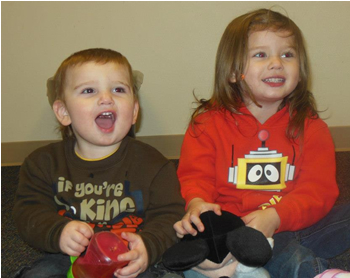 Jim Dossett's Grandchildren |
My understanding of the court system was similar to most Americans understanding of it. We read about court proceedings online, in newspapers and we hear about them on TV. Obey the law, no problem. Disobey the law and we have the finest system going. Our system compared to many is far and away the best. However it has, as I have come to learn, certain flaws that have evolved and have tilted the scales of justice.
My understanding of the court system in a nut shell was that, truth is found by careful and dutiful dissection in the court room. Evidence is paramount and lies are dissolved. Unfortunately politics, ego and dollars have consumed it.
This is our story. It could happen to anyone. It has and is happening here (Yamhill County Oregon) and around the country. Families are caught up in the bureaucratic functions of state departments so consumed by their internal policies that any attempt to cast reason their way is met with condemnation. That condemnation is supported by their superior understanding of the legal system. It did not happen overnight. Over years and decades, laws have been generated that enable government to pursue an agenda that would normally be considered unconstitutional by most American standards. In Oregon the Department of Human Services (DHS) primarily pursues court actions through the juvenile court system. The opposing party is put on the defense. An opposing party is considered guilty until proven innocent. In cases like ours the judge is the decider, no jury required. The State has unlimited funds for legal representation and experts. Unless money is of no consequence to those challenging the state, a public defender is the degree of legal help most receive. Money was of a consequence to us though we soon found out, that a public defender is not the best option in today’s court. Time is of no consequence to DHS. Once embroiled in a court case they are exacting their job description. Whereas their opponents have to shift, maneuver and crunch their daily lives at the expense of the system. Understand that court is only held during the work week and during normal working hours.
My understanding of the court system in a nut shell was that, truth is found by careful and dutiful dissection in the court room. Evidence is paramount and lies are dissolved. Unfortunately politics, ego and dollars have consumed it.
This is our story. It could happen to anyone. It has and is happening here (Yamhill County Oregon) and around the country. Families are caught up in the bureaucratic functions of state departments so consumed by their internal policies that any attempt to cast reason their way is met with condemnation. That condemnation is supported by their superior understanding of the legal system. It did not happen overnight. Over years and decades, laws have been generated that enable government to pursue an agenda that would normally be considered unconstitutional by most American standards. In Oregon the Department of Human Services (DHS) primarily pursues court actions through the juvenile court system. The opposing party is put on the defense. An opposing party is considered guilty until proven innocent. In cases like ours the judge is the decider, no jury required. The State has unlimited funds for legal representation and experts. Unless money is of no consequence to those challenging the state, a public defender is the degree of legal help most receive. Money was of a consequence to us though we soon found out, that a public defender is not the best option in today’s court. Time is of no consequence to DHS. Once embroiled in a court case they are exacting their job description. Whereas their opponents have to shift, maneuver and crunch their daily lives at the expense of the system. Understand that court is only held during the work week and during normal working hours.
My experience with the system was brought on by an injustice that occurred in my family. I am the grandfather of an infant that was stricken with rickets. His parents are the typical loving mother and father. They have been accused by the State of Oregon of abusing their five week old son.
Here is our story:
On October 1, 2011 - my grandson was born. He was like his mother, stubborn as he refused to come out when the time was near. It had been two weeks since his scheduled delivery time. The doctor wanted to induce labor. My daughter was upset and concerned as she had read a lot about the medicine they were going to use. It was Pitocin, a highly controversial induction medication. I assured my daughter that the doctor knew what was best. The delivery was rough to say the least. My grandson got stuck coming out. My grandson was what is known as “Shoulder Dystocia”. His shoulders were stuck in the pelvis. The doctor manipulated my grandson with his hands for about 90 seconds which was a long time, in a scary situation. The infant was blue and not breathing when he finally inched through. The delivery team corrected his breathing and aside from being bruised, my grandson looked fine. His ABGAR score at birth was 3 (out of ten). That is a scale hospitals use to assess a child’s health at birth. He was not X-rayed at the time as X-rays are not normally done on newborns for obvious reasons. Unfortunately another infant was admitted to the hospital that was dead or dying on arrival. We totally understand the hospitals priority in that matter. Though, his misfortune took up practically the entire hospitals attention, which included the pediatrician on duty. Although close monitoring of my grandson by the pediatrician had been requested by the delivery doctor, it did not occur.
To top off my grandsons condition he had jaundice. Not severely but it took a few days to clear up. (In the past year I have researched many publications and presentations, one of particular interest for our case was a Dr. Sabah Serveas. She presented a power point lecture at a radiologist conference about birth injuries that resemble abuse. A Dr. Kleinman did an article addressing the problems with diagnosing metaphyseal fractures which mentions rickets.)
After leaving Willamette Valley Medical Center (WVMC) my grandson had to return the following 2 days for check-ups on his jaundice condition. The parents were exceptional in looking after his health needs. He had 2 well baby checks in his first two weeks. At about the third week he was seen by a doctor that performed a circumcision. On Nov. 7th he was seen along with my daughters mid wife. The mid wife admired my grandson during their visit. And of course the doting grandparents were almost always hovering close by. Everything was just perfect.
Clearly nothing was out of place. If there was any sign of neglect or abuse it is only logical that it would have been reported.
The nightmare that ensued has challenged my belief and respect for the system. It all started on Nov. 8th 2011. My grandson was 5 weeks old at this time. He had from birth been fussy and requiring a lot of love and attention. He was fussier than normal, and on Nov. 7th, his temperature was slightly elevated and he had been expelling a higher than normal amount of gas. My daughter administered baby Tylenol for his fever and an over the counter gas relief (gripe water). The next day his temperature was still slightly elevated (100.1). Whenever he was adjusted for feeding or diaper changes it was obvious he was in discomfort. The parents called an advice nurse that instructed them to have a doctor take a look at the infant, just to be on the safe side. It was after 5pm and the only available medical attention was the emergency room at WVMC.
When they arrived they saw a receptionist that took care of the initial paper work and had them wait for their examination. That wait was about an hour long. Important, as it must not have appeared that the infant required any emergency care. Once in the exam room, a triage nurse evaluated my grandson’s condition. Of importance is that she is quoted in her report stating, “All four extremities are strong and moving equally”. She does not pass down any concerns about the infant’s leg or suggest special care to the on duty pediatrician. Next, the duty pediatrician (Dr. Shaver) examined my grandson, noting in his report that upon entering the room he sees the infant laying on the table calmly looking about. After doing a visual check the doctor performs a hip check. My daughter and son-in-law heard and see my grandson scream. This is the first time either of them has heard him scream in his short few weeks. The doctor performed another hip check and another scream occurred. The doctor said that it was normal for an infant with abdominal issues. The doctor requested an abdominal X-ray and left the room. At 2006 hrs an X-ray tech entered in the room with a portable X-ray and attempted to do an X-ray of the abdomen.
As described to me: While positioning the child, the tech asks my son-in-law if the doctor had said anything about the child’s leg. The doctor had not. The tech X-rays the abdomen and leaves with his portable X-ray. Thirty minutes later at 2036, the tech returns with his portable X-ray and performs an X-ray of the child’s leg. This x-ray shows that the left femur is fractured. (During court, the doctor stated that he had ordered the X-rays at the same time.) The doctor advises that because the parents cannot explain how this happened, he is doing his job and starts a mandatory investigation. The parents are sincerely concerned for their child and hope the investigation explains what is wrong with their child.
Of note and surely to battle in the court room later is why did the doctor not convey his concerns about the leg from the beginning? In the judge's opinion it was stated that the doctor was immediately aware of a problem with the leg. Seriously? He ordered an abdominal X-ray. He does not pass on any information to the X-ray tech about careful handling of the leg? Had my grandson been discharged that night with concern only for his stomach what would have been the hospitals response when later he was brought in for a broken leg? Prior medical attention would have been considered thorough and no sign of injury.
Here is our story:
On October 1, 2011 - my grandson was born. He was like his mother, stubborn as he refused to come out when the time was near. It had been two weeks since his scheduled delivery time. The doctor wanted to induce labor. My daughter was upset and concerned as she had read a lot about the medicine they were going to use. It was Pitocin, a highly controversial induction medication. I assured my daughter that the doctor knew what was best. The delivery was rough to say the least. My grandson got stuck coming out. My grandson was what is known as “Shoulder Dystocia”. His shoulders were stuck in the pelvis. The doctor manipulated my grandson with his hands for about 90 seconds which was a long time, in a scary situation. The infant was blue and not breathing when he finally inched through. The delivery team corrected his breathing and aside from being bruised, my grandson looked fine. His ABGAR score at birth was 3 (out of ten). That is a scale hospitals use to assess a child’s health at birth. He was not X-rayed at the time as X-rays are not normally done on newborns for obvious reasons. Unfortunately another infant was admitted to the hospital that was dead or dying on arrival. We totally understand the hospitals priority in that matter. Though, his misfortune took up practically the entire hospitals attention, which included the pediatrician on duty. Although close monitoring of my grandson by the pediatrician had been requested by the delivery doctor, it did not occur.
To top off my grandsons condition he had jaundice. Not severely but it took a few days to clear up. (In the past year I have researched many publications and presentations, one of particular interest for our case was a Dr. Sabah Serveas. She presented a power point lecture at a radiologist conference about birth injuries that resemble abuse. A Dr. Kleinman did an article addressing the problems with diagnosing metaphyseal fractures which mentions rickets.)
After leaving Willamette Valley Medical Center (WVMC) my grandson had to return the following 2 days for check-ups on his jaundice condition. The parents were exceptional in looking after his health needs. He had 2 well baby checks in his first two weeks. At about the third week he was seen by a doctor that performed a circumcision. On Nov. 7th he was seen along with my daughters mid wife. The mid wife admired my grandson during their visit. And of course the doting grandparents were almost always hovering close by. Everything was just perfect.
Clearly nothing was out of place. If there was any sign of neglect or abuse it is only logical that it would have been reported.
The nightmare that ensued has challenged my belief and respect for the system. It all started on Nov. 8th 2011. My grandson was 5 weeks old at this time. He had from birth been fussy and requiring a lot of love and attention. He was fussier than normal, and on Nov. 7th, his temperature was slightly elevated and he had been expelling a higher than normal amount of gas. My daughter administered baby Tylenol for his fever and an over the counter gas relief (gripe water). The next day his temperature was still slightly elevated (100.1). Whenever he was adjusted for feeding or diaper changes it was obvious he was in discomfort. The parents called an advice nurse that instructed them to have a doctor take a look at the infant, just to be on the safe side. It was after 5pm and the only available medical attention was the emergency room at WVMC.
When they arrived they saw a receptionist that took care of the initial paper work and had them wait for their examination. That wait was about an hour long. Important, as it must not have appeared that the infant required any emergency care. Once in the exam room, a triage nurse evaluated my grandson’s condition. Of importance is that she is quoted in her report stating, “All four extremities are strong and moving equally”. She does not pass down any concerns about the infant’s leg or suggest special care to the on duty pediatrician. Next, the duty pediatrician (Dr. Shaver) examined my grandson, noting in his report that upon entering the room he sees the infant laying on the table calmly looking about. After doing a visual check the doctor performs a hip check. My daughter and son-in-law heard and see my grandson scream. This is the first time either of them has heard him scream in his short few weeks. The doctor performed another hip check and another scream occurred. The doctor said that it was normal for an infant with abdominal issues. The doctor requested an abdominal X-ray and left the room. At 2006 hrs an X-ray tech entered in the room with a portable X-ray and attempted to do an X-ray of the abdomen.
As described to me: While positioning the child, the tech asks my son-in-law if the doctor had said anything about the child’s leg. The doctor had not. The tech X-rays the abdomen and leaves with his portable X-ray. Thirty minutes later at 2036, the tech returns with his portable X-ray and performs an X-ray of the child’s leg. This x-ray shows that the left femur is fractured. (During court, the doctor stated that he had ordered the X-rays at the same time.) The doctor advises that because the parents cannot explain how this happened, he is doing his job and starts a mandatory investigation. The parents are sincerely concerned for their child and hope the investigation explains what is wrong with their child.
Of note and surely to battle in the court room later is why did the doctor not convey his concerns about the leg from the beginning? In the judge's opinion it was stated that the doctor was immediately aware of a problem with the leg. Seriously? He ordered an abdominal X-ray. He does not pass on any information to the X-ray tech about careful handling of the leg? Had my grandson been discharged that night with concern only for his stomach what would have been the hospitals response when later he was brought in for a broken leg? Prior medical attention would have been considered thorough and no sign of injury.
 Jim Dossett's Grandchildren |
Anyway, my grandson is transferred to Oregon Health and Science University (OHSU)/Doernbechers hospital. There, a battery of tests is done. At this time there is slight swelling on the left leg that had not been there before. There was a skeletal survey done and it showed the femur fracture, some metaphyseal fractures and three rib fractures healing in various stages. There was no bruising, no soft tissue damage, no retinal hemorrhaging, no neck or head injuries, and no internal organ damage (internal CT scan was completed also with only minor differences in bone condition). The Abuse team nurse requests a vitamin D level blood test. Complete blood panels are done. Calcium, Phosphorus and PTH levels are also requested. Vitamin D, Phosphorus and calcium and PTH levels are essential to establishing bone strength without doing a bone density check (which was not done). The Vitamin D test was lost? The Calcium and Phosphorus were classified as Quantity Not Sufficient. And the PTH was Not Received.
Later - this is extremely important, everyone totally ignored this major discrepancy in our case.
On Nov 9th at an emergency hearing in Yamhill county court we had our first taste of how the DHS exults its power. After hearing all of the evidence the judge (Easterday) ordered that my grandson and his sister be allowed to stay with the parents until the jurisdictional hearing in January, under the stipulation that I and my wife be safety supervisors. That was generally accepted, as the parents and children were living with us at the time. At that point the DHS case worker Becky Brewster raised her hand and told the judge that she must reconsider. She told the judge that she needs to know that the infant boy had multiple fractures and liver damage. The word fracture was used for effect by DHS. Metaphyseals are located on the ends of the bones. Whenever someone hears fracture the visual of a bone snapped in half comes to mind. That is not the case with metaphyseal. The article by Dr Kleinman states that metaphyseal are indistinguishable from Rickets. And the presentation by Dr Servaes describes them as common in birth.
Becky Brewster in my opinion is an overzealous attention seeking case worker that feels that she is empowered with the duty of saving the children no matter what the cost. Unfortunately that weighs in with ignoring parenting rights, the constitution and lying under oath to accomplish her mission.
For the record - My 18 month old granddaughter was subjected to a skeletal X-ray upon the judge’s request. Her health was perfect.
The petition that was presented to the court listed the femur fracture as a fracture, the metaphyseal and rib fractures were at the time listed as possible and probable. The liver was not listed as damaged. The petition stated that liver enzymes were elevated, indicative of liver damage. The enzymes were elevated. At the time of the emergency hearing we explained that the doctor that performed the tests had confirmed to us that there was no liver or any internal damage. We fought that misrepresentation for most of our battle with the state. The judge (Cal Tichenor) wrote in his opinion that liver damage was ruled out and was not a consideration in his findings. One thing that annoys me is that we told everyone that my grandson had a low fever and that he had been given children’s Tylenol. Our research found that Tylenol raises the very liver enzymes that were being used to accuse us of abuse. Really, none of the doctors gave it a thought.
As is protocol for skeletal X-rays a follow up is required approximately 2 weeks later for evaluation of the healing process. On December 2, a second Skeletal X-ray was performed. On this one the same radiologist that read the first one mentioned that there was minimal periosteal formation on the 5th rib. Periosteal is what forms around bones in the healing process. The original X-ray showed no signs of a fracture on the 5th rib, nor did the CT scan (The radiologist had ordered the CT because she stated that it has a better modality for viewing ribs). The first Skeletal X-ray and CT scan on Nov 9th were basically identical though the CT scan reader had actually identified a rib (#7 rib) that the radiologist for the skeletal X-ray had identified as a fracture, stating that it was actually just artifact(?). The infant was out of the parent’s custody as of the 10th of Nov.When the Skeletal X-ray was done on Dec 2nd any fracture phase not on the first set was something that had to have occurred while in the states custody.The logical explanation is that a bone was fractured while the infant was in the states care. The radiologist did try to maneuver around how it could have happened. She was unable to deny that it was possible and could have occurred while my grandson was in foster care (state custody). Judge Tichenor ordered a 3rd X-ray during our first hearing to settle that argument. DHS ignored that order. Also, of note is that one of the liver enzymes presented as being elevated and indicative of a fracture (ALT) was at its highest level when checked while in the states care.
Our case was never one with criminal charges. It has always been a fight with DHS over custody. They had taken an infant away from a family without any factual evidence. There was no evidence of a crime having been committed. Yes, a non mobile child had a broken leg. There are, as I have found numerous medical explanations for weakened bones in infants. Diseases and vitamin deficiencies account for many. An infants' bones are “normally” strong and or pliable and do not break easily.
If as the experts had detailed in our case, there should have been attendant signs of abuse if in fact abuse had occurred. In our case where there was no explanation for what happened to my grandson’s femur. There was no swelling, no bruising, no soft tissue damage, no internal organ damage, no head or neck injuries.
When a child is taken from a family by the state, the court system gets involved and that is where this case turned horrific. On Nov.10, 2011 DHS took control of my grandson. Then the court system had to set up a hearing to hear testimony and the evidence. That was not possible until Jan.5th - almost 2 months later. Imagine having your child taken away knowing that he must have some kind of a condition that caused all of this and the system just whisks him away for months until you prove it was a health condition. It is insane. The parents have no drug, alcohol or domestic issues. Both are educated with a degree or seeking a degree. They have a perfectly healthy 18 month old (at that time). The infant that was taken had a rough delivery. All of this background info readily available and they take the infant away. The State knows that once they take custody, they are aware of the immense burden that places on them. They now have to justify it. The State has a huge legal team at their disposal. We know something is wrong with the infant’s bones. We make an appointment with the Shriner’s Hospital to have him checked out. Upon DHS finding out about this Becky Brewster cancels the appointment. When on the stand and asked if she had in fact cancelled it, she denied it. The judge presented her with the Shriner’s Document that showed her name as the person that had in fact cancelled the appointment! This action was ignored by the court; accept to make DHS arrange for another Shriner’s appointment. All DHS allowed Shriners to do in that rescheduled appointment was to review current medical records. No new testing was done.
Judge Tichenor heard our case in January and disregarded all of our experts, including one Dr David Ayoub, a radiologist with 23 years experience. That expert diagnosed my grandson with neonatal rickets and was 100% sure of his diagnosis. Two other doctors, one a pediatrician with 16 years experience and a medical emergency doctor with 30 years experience. Both felt that abuse was not the cause of the injuries. Pointing out that they had never seen a traumatic leg fracture without attendant outside signs of injury. Even the infant’s pediatrician who had been seeing the infant while in the states care wanted further testing done. He was not convinced it was abuse.
In my opinion the judge ruled in such a way as to take the responsibility away from the court. This also allowed him to let his DA win the case. If the judge ruled in favor of the state, it would go as most cases go. The State will control what the parents have to do to get their infant back. Psychological testing, parenting classes, visitation control, etc. All under the guise that it is in the best interest of the infant. It is a win win for the judge. All he has to do is write his opinion so as to justify his ruling. Now, what if the ruling affects the rest of the life of the parents and the child’s future? In our case with the parents, one has a psychology degree and the other is working towards one in that field. Where will they be able to use those degrees? They will be placed on a child abuser list for the rest of their lives. Would you think that it would be in the best interest of your child to give up your future source of income and their stability? Throw away all that money invested in a private college (Linfield College).
Currently we are still fighting. We lost our case in the first hearing. Albeit we believe that the transcripts bear out that the judge’s decision was wrong. He admitted that he did not know what happened to the infant. Plus how can he rule on a preponderance of the evidence when there was still doubt as to the occurrence of the 5th rib being fractured? The appeals Court chose the same course of action as Judge Tichenor. They did not read the transcripts as we requested.
New evidence has surfaced since the first hearing. Of course it could not be presented to the appeals court because it was not part of the first hearing. We are requesting a new hearing to review that an endocrinologist report done after the hearing showed that my grandson had been started on a high dosage prescription - Ergocalciferol D2 oral Nov 25th . During the original hearing the States expert, Dr. Valvano had convinced the judge that vitamin D was not important. We had argued during the hearing that Vitamin D fortified formula was used extensively prior to the blood test and that alone would have significantly increased his vitamin D level. My grandson’s levels were deficient at 20.7 even after formula supplementation.(Formula contains at least 40 IU of vitamin D per serving size)We are aware of 5 straight days of only having formula prior to the blood test which equates to about 400 UI a day of Vit D. We are adamant that the supplementation not only raised his levels, but was used along with the Ergocalciferol D2 to treat a bone condition.Which ironically is the vitamin that Dr Valvano said was not important.
Later - this is extremely important, everyone totally ignored this major discrepancy in our case.
On Nov 9th at an emergency hearing in Yamhill county court we had our first taste of how the DHS exults its power. After hearing all of the evidence the judge (Easterday) ordered that my grandson and his sister be allowed to stay with the parents until the jurisdictional hearing in January, under the stipulation that I and my wife be safety supervisors. That was generally accepted, as the parents and children were living with us at the time. At that point the DHS case worker Becky Brewster raised her hand and told the judge that she must reconsider. She told the judge that she needs to know that the infant boy had multiple fractures and liver damage. The word fracture was used for effect by DHS. Metaphyseals are located on the ends of the bones. Whenever someone hears fracture the visual of a bone snapped in half comes to mind. That is not the case with metaphyseal. The article by Dr Kleinman states that metaphyseal are indistinguishable from Rickets. And the presentation by Dr Servaes describes them as common in birth.
Becky Brewster in my opinion is an overzealous attention seeking case worker that feels that she is empowered with the duty of saving the children no matter what the cost. Unfortunately that weighs in with ignoring parenting rights, the constitution and lying under oath to accomplish her mission.
For the record - My 18 month old granddaughter was subjected to a skeletal X-ray upon the judge’s request. Her health was perfect.
The petition that was presented to the court listed the femur fracture as a fracture, the metaphyseal and rib fractures were at the time listed as possible and probable. The liver was not listed as damaged. The petition stated that liver enzymes were elevated, indicative of liver damage. The enzymes were elevated. At the time of the emergency hearing we explained that the doctor that performed the tests had confirmed to us that there was no liver or any internal damage. We fought that misrepresentation for most of our battle with the state. The judge (Cal Tichenor) wrote in his opinion that liver damage was ruled out and was not a consideration in his findings. One thing that annoys me is that we told everyone that my grandson had a low fever and that he had been given children’s Tylenol. Our research found that Tylenol raises the very liver enzymes that were being used to accuse us of abuse. Really, none of the doctors gave it a thought.
As is protocol for skeletal X-rays a follow up is required approximately 2 weeks later for evaluation of the healing process. On December 2, a second Skeletal X-ray was performed. On this one the same radiologist that read the first one mentioned that there was minimal periosteal formation on the 5th rib. Periosteal is what forms around bones in the healing process. The original X-ray showed no signs of a fracture on the 5th rib, nor did the CT scan (The radiologist had ordered the CT because she stated that it has a better modality for viewing ribs). The first Skeletal X-ray and CT scan on Nov 9th were basically identical though the CT scan reader had actually identified a rib (#7 rib) that the radiologist for the skeletal X-ray had identified as a fracture, stating that it was actually just artifact(?). The infant was out of the parent’s custody as of the 10th of Nov.When the Skeletal X-ray was done on Dec 2nd any fracture phase not on the first set was something that had to have occurred while in the states custody.The logical explanation is that a bone was fractured while the infant was in the states care. The radiologist did try to maneuver around how it could have happened. She was unable to deny that it was possible and could have occurred while my grandson was in foster care (state custody). Judge Tichenor ordered a 3rd X-ray during our first hearing to settle that argument. DHS ignored that order. Also, of note is that one of the liver enzymes presented as being elevated and indicative of a fracture (ALT) was at its highest level when checked while in the states care.
Our case was never one with criminal charges. It has always been a fight with DHS over custody. They had taken an infant away from a family without any factual evidence. There was no evidence of a crime having been committed. Yes, a non mobile child had a broken leg. There are, as I have found numerous medical explanations for weakened bones in infants. Diseases and vitamin deficiencies account for many. An infants' bones are “normally” strong and or pliable and do not break easily.
If as the experts had detailed in our case, there should have been attendant signs of abuse if in fact abuse had occurred. In our case where there was no explanation for what happened to my grandson’s femur. There was no swelling, no bruising, no soft tissue damage, no internal organ damage, no head or neck injuries.
When a child is taken from a family by the state, the court system gets involved and that is where this case turned horrific. On Nov.10, 2011 DHS took control of my grandson. Then the court system had to set up a hearing to hear testimony and the evidence. That was not possible until Jan.5th - almost 2 months later. Imagine having your child taken away knowing that he must have some kind of a condition that caused all of this and the system just whisks him away for months until you prove it was a health condition. It is insane. The parents have no drug, alcohol or domestic issues. Both are educated with a degree or seeking a degree. They have a perfectly healthy 18 month old (at that time). The infant that was taken had a rough delivery. All of this background info readily available and they take the infant away. The State knows that once they take custody, they are aware of the immense burden that places on them. They now have to justify it. The State has a huge legal team at their disposal. We know something is wrong with the infant’s bones. We make an appointment with the Shriner’s Hospital to have him checked out. Upon DHS finding out about this Becky Brewster cancels the appointment. When on the stand and asked if she had in fact cancelled it, she denied it. The judge presented her with the Shriner’s Document that showed her name as the person that had in fact cancelled the appointment! This action was ignored by the court; accept to make DHS arrange for another Shriner’s appointment. All DHS allowed Shriners to do in that rescheduled appointment was to review current medical records. No new testing was done.
Judge Tichenor heard our case in January and disregarded all of our experts, including one Dr David Ayoub, a radiologist with 23 years experience. That expert diagnosed my grandson with neonatal rickets and was 100% sure of his diagnosis. Two other doctors, one a pediatrician with 16 years experience and a medical emergency doctor with 30 years experience. Both felt that abuse was not the cause of the injuries. Pointing out that they had never seen a traumatic leg fracture without attendant outside signs of injury. Even the infant’s pediatrician who had been seeing the infant while in the states care wanted further testing done. He was not convinced it was abuse.
In my opinion the judge ruled in such a way as to take the responsibility away from the court. This also allowed him to let his DA win the case. If the judge ruled in favor of the state, it would go as most cases go. The State will control what the parents have to do to get their infant back. Psychological testing, parenting classes, visitation control, etc. All under the guise that it is in the best interest of the infant. It is a win win for the judge. All he has to do is write his opinion so as to justify his ruling. Now, what if the ruling affects the rest of the life of the parents and the child’s future? In our case with the parents, one has a psychology degree and the other is working towards one in that field. Where will they be able to use those degrees? They will be placed on a child abuser list for the rest of their lives. Would you think that it would be in the best interest of your child to give up your future source of income and their stability? Throw away all that money invested in a private college (Linfield College).
Currently we are still fighting. We lost our case in the first hearing. Albeit we believe that the transcripts bear out that the judge’s decision was wrong. He admitted that he did not know what happened to the infant. Plus how can he rule on a preponderance of the evidence when there was still doubt as to the occurrence of the 5th rib being fractured? The appeals Court chose the same course of action as Judge Tichenor. They did not read the transcripts as we requested.
New evidence has surfaced since the first hearing. Of course it could not be presented to the appeals court because it was not part of the first hearing. We are requesting a new hearing to review that an endocrinologist report done after the hearing showed that my grandson had been started on a high dosage prescription - Ergocalciferol D2 oral Nov 25th . During the original hearing the States expert, Dr. Valvano had convinced the judge that vitamin D was not important. We had argued during the hearing that Vitamin D fortified formula was used extensively prior to the blood test and that alone would have significantly increased his vitamin D level. My grandson’s levels were deficient at 20.7 even after formula supplementation.(Formula contains at least 40 IU of vitamin D per serving size)We are aware of 5 straight days of only having formula prior to the blood test which equates to about 400 UI a day of Vit D. We are adamant that the supplementation not only raised his levels, but was used along with the Ergocalciferol D2 to treat a bone condition.Which ironically is the vitamin that Dr Valvano said was not important.
At one point during this ordeal we suspected sex abuse and physical abuse of my grandson. The judicial system proved its unworthiness to me again. Once we submitted for a hearing to get my grandson out of that situation. The court in its almightiness scheduled a hearing for 2 weeks away. Yes, two weeks. All the while the infant was to stay in a home that had had suspected child abuse. When we finally made it to court the state argued for almost an entire day. The hearing was originally scheduled for an hour and changed on the day of the hearing for 3 hours. After all was said and the day was completed. The hearing was not. It was again scheduled to be seen again in 2 months. YES, two months later, all the while my infant grandson remained in the same foster care. It is ludicrous! Nothing in the world boils me over as much as the double sidedness of the court. When child abuse is suspected by DHS the state will take your child away in an instant. But when the shoe is on the other foot, the lines are crossed and the rules changed. No one has been able to explain to me how the best interest of the child is served when the State is only concerned with its own best interests!
We have been fighting this case now for over a year. We know that we are right and that the only reason this has gone on for so long is because of the states power. They control the courtroom in this particular kind of a case. They are normally dealing with parents that are either guilty or can only afford a public defender that probably councils them to do whatever the state says and just walk away. We have had three public defenders and have hired 3 different attorneys. One has stood by our side the entire time. His experience in this type of a case spans 35 years. He is determined to win. We also hired an attorney to represent us in a petition for review, sent to the Oregon Supreme Court. We found out this past February that the Oregon Supreme Court will not take on our case. We will not stop fighting.
My daughter and Son-in-law did not abuse their son. That is the truth and the truth stands alone, it will always be the truth.
Jim Dossett
ABH1 (E-6)
USN Retired
Jim Dossett
ABH1 (E-6)
USN Retired