

Showing posts with label child abuse. Show all posts
Showing posts with label child abuse. Show all posts
Wednesday, December 9, 2015


Thursday, September 3, 2015
Thank You
Hello Friends!
I'm a little late to share this, but I wanted to say Thank You for your support. We recently just hit 100,000 visitors! WOW! I never imagined that we would receive this much attention.
Since This Started
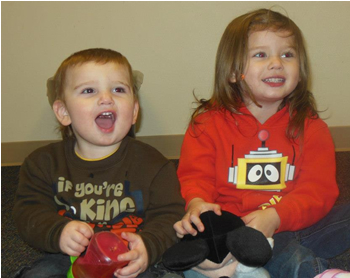
It has been quite a while since we started this blog. Our son had been taken away, and he was gone for 17 months. It was a hard battle, but eventually we got our son back and our family whole again. It wasn't without much pain, and we're still recovering 2 years after he came home. Our son and daughter never leave each other's sides. Whether this is due to their close age or the fact that she had to visit her baby brother at a DHS office, who knows for sure. But they love each other very much.
Both of our children have since been diagnosed with Ehlers-Danlos Type III, which is a hypermobility branch of the disorder. My son has more severe symptoms, often having tiny pinpoint bruises and joint pain, especially in his feet. My daughter seems to have a less severe case, though she did just suffer an elbow injury that was made worse due to her naturally bendy elbows.
We're finally starting to break away from the damage caused by the judicial system. For the longest time we were stuck living with my in-laws. We were stuck there for 4 years! As you can imagine, tension builds up after a while. But now we finally bought our own house and can start raising our kids.
Still Seeking Action
Again, I want to Thank You all for your support. The battle isn't over as we are still on the "child abuse registry" that Oregon DHS keeps. We are trying to work with lawyers and public officials to change this law since it does violate our due process rights. We know this battle is hard, maybe one of the most difficult ones in life. Keep strong, and I hope that we can support you as much as you have supported us.
Daniel Dossey
I'm a little late to share this, but I wanted to say Thank You for your support. We recently just hit 100,000 visitors! WOW! I never imagined that we would receive this much attention.
Since This Started
It has been quite a while since we started this blog. Our son had been taken away, and he was gone for 17 months. It was a hard battle, but eventually we got our son back and our family whole again. It wasn't without much pain, and we're still recovering 2 years after he came home. Our son and daughter never leave each other's sides. Whether this is due to their close age or the fact that she had to visit her baby brother at a DHS office, who knows for sure. But they love each other very much.
Both of our children have since been diagnosed with Ehlers-Danlos Type III, which is a hypermobility branch of the disorder. My son has more severe symptoms, often having tiny pinpoint bruises and joint pain, especially in his feet. My daughter seems to have a less severe case, though she did just suffer an elbow injury that was made worse due to her naturally bendy elbows.
We're finally starting to break away from the damage caused by the judicial system. For the longest time we were stuck living with my in-laws. We were stuck there for 4 years! As you can imagine, tension builds up after a while. But now we finally bought our own house and can start raising our kids.
Still Seeking Action
Again, I want to Thank You all for your support. The battle isn't over as we are still on the "child abuse registry" that Oregon DHS keeps. We are trying to work with lawyers and public officials to change this law since it does violate our due process rights. We know this battle is hard, maybe one of the most difficult ones in life. Keep strong, and I hope that we can support you as much as you have supported us.
Daniel Dossey
Thursday, August 6, 2015
Today's Hero: Dr. Michael F. Holick, Ph.D., M.D.
Michael F. Holick, Ph.D., M.D.

Professor of Medicine, Physiology and Biophysics at Boston University School of Medicine
Medical School: University of Wisconsin, Madison
Residency: Massachusetts General Hospital
Fellowship/Post-residency: Massachusetts General Hospital
Residency: Massachusetts General Hospital
Fellowship/Post-residency: Massachusetts General Hospital
Areas of Interest: Vitamin D, Calcium, Bone Metabolism, Photobiology of Vitamin D, Osteoporosis
Accomplishments:
• Increased awareness in the pediatric and medical communities regarding vitamin D defi ciency
pandemic, and its role in causing not only metabolic bone disease, and osteoporosis in adults, but
increasing risk of children and adults developing common deadly cancers, autoimmune diseases,
including type 1 diabetes and multiple sclerosis and heart disease.
• Recipient of numerous awards and honors, including the American Skin Associations Psoriasis
Research Achievement Award, the American College of Nutrition Award, the Robert H Herman
Memorial Award in Clinical Nutrition from the American Society for Clinical Nutrition, the Annual
General Clinical Research Centers Program Award for Excellence in Clinical Research and the
Linus Pauling Functional Medicine Award from the Institute for Functional Medicine.
pandemic, and its role in causing not only metabolic bone disease, and osteoporosis in adults, but
increasing risk of children and adults developing common deadly cancers, autoimmune diseases,
including type 1 diabetes and multiple sclerosis and heart disease.
• Recipient of numerous awards and honors, including the American Skin Associations Psoriasis
Research Achievement Award, the American College of Nutrition Award, the Robert H Herman
Memorial Award in Clinical Nutrition from the American Society for Clinical Nutrition, the Annual
General Clinical Research Centers Program Award for Excellence in Clinical Research and the
Linus Pauling Functional Medicine Award from the Institute for Functional Medicine.

http://www.bumc.bu.edu/endo/faculty/holick/
Monday, February 17, 2014
Saturday, January 18, 2014
A Critical Review of the Classic Metaphyseal Lesion: Traumatic or Metabolic?
http://www.ajronline.org/doi/abs/10.2214/AJR.13.10540
David M. Ayoub, Charles Hyman, Marta Cohen and Marvin Miller
David M. Ayoub, Charles Hyman, Marta Cohen and Marvin Miller
ABSTRACT :
OBJECTIVE. The purpose of this study was to review the hypothesis that classic metaphyseal lesions represent traumatic changes in abused infants and compare these lesions with healing rickets.
MATERIALS AND METHODS. Using a PubMed search, a multidisciplinary team reviewed studies that reported the histopathologic correlation of classic metaphyseal lesions. Selective studies of growth plate injury and rickets were cross-referenced.
RESULTS. Nine identified classic metaphyseal lesion studies were performed by the same principal investigator. Control subjects were inadequate. Details of abuse determination and metabolic bone disease exclusion were lacking. The presence of only a single radiology reviewer prevented establishment of interobserver variability. Microscopy was performed by two researchers who were not pathologists. Classic metaphyseal lesions have not been experimentally reproduced and are unrecognized in the accidental trauma literature. The proposed primary spongiosa location is inconsistent with the variable radiographic appearances. Classic metaphyseal lesions were not differentiated from tissue processing artifacts. Bleeding and callus were uncommon in spite of the vascular nature of the metaphysis. The conclusion that excessive hypertrophic chondrocytes secondary to vascular disruption were indicative of fracture healing contradicts the paucity of bleeding, callus, and periosteal reaction. Several similarities exist between classic metaphyseal lesions and healing rickets, including excessive hypertrophic chondrocytes. “Bucket-handle” and “corner fracture” classic metaphyseal lesions resemble healing rickets within the growth plate and the perichondrial ring, respectively. The age of presentation was more typical of bone fragility disorders, including rickets, than reported in prior child abuse series.
CONCLUSION. The hypothesis that classic metaphyseal lesions are secondary to child abuse is poorly supported. Their histologic and radiographic features are similar to healing infantile rickets. Until classic metaphyseal lesions are experimentally replicated and independently validated, their traumatic origin remains unsubstantiated.
OBJECTIVE. The purpose of this study was to review the hypothesis that classic metaphyseal lesions represent traumatic changes in abused infants and compare these lesions with healing rickets.
MATERIALS AND METHODS. Using a PubMed search, a multidisciplinary team reviewed studies that reported the histopathologic correlation of classic metaphyseal lesions. Selective studies of growth plate injury and rickets were cross-referenced.
RESULTS. Nine identified classic metaphyseal lesion studies were performed by the same principal investigator. Control subjects were inadequate. Details of abuse determination and metabolic bone disease exclusion were lacking. The presence of only a single radiology reviewer prevented establishment of interobserver variability. Microscopy was performed by two researchers who were not pathologists. Classic metaphyseal lesions have not been experimentally reproduced and are unrecognized in the accidental trauma literature. The proposed primary spongiosa location is inconsistent with the variable radiographic appearances. Classic metaphyseal lesions were not differentiated from tissue processing artifacts. Bleeding and callus were uncommon in spite of the vascular nature of the metaphysis. The conclusion that excessive hypertrophic chondrocytes secondary to vascular disruption were indicative of fracture healing contradicts the paucity of bleeding, callus, and periosteal reaction. Several similarities exist between classic metaphyseal lesions and healing rickets, including excessive hypertrophic chondrocytes. “Bucket-handle” and “corner fracture” classic metaphyseal lesions resemble healing rickets within the growth plate and the perichondrial ring, respectively. The age of presentation was more typical of bone fragility disorders, including rickets, than reported in prior child abuse series.
CONCLUSION. The hypothesis that classic metaphyseal lesions are secondary to child abuse is poorly supported. Their histologic and radiographic features are similar to healing infantile rickets. Until classic metaphyseal lesions are experimentally replicated and independently validated, their traumatic origin remains unsubstantiated.
Wednesday, March 27, 2013
State Sanctioned Kidnapping
U.S. Observer

By Jim Dossett
At one point during this ordeal we suspected sex abuse and physical abuse of my grandson. The judicial system proved its unworthiness to me again. Once we submitted for a hearing to get my grandson out of that situation. The court in its almightiness scheduled a hearing for 2 weeks away. Yes, two weeks. All the while the infant was to stay in a home that had had suspected child abuse. When we finally made it to court the state argued for almost an entire day. The hearing was originally scheduled for an hour and changed on the day of the hearing for 3 hours. After all was said and the day was completed. The hearing was not. It was again scheduled to be seen again in 2 months. YES, two months later, all the while my infant grandson remained in the same foster care. It is ludicrous! Nothing in the world boils me over as much as the double sidedness of the court. When child abuse is suspected by DHS the state will take your child away in an instant. But when the shoe is on the other foot, the lines are crossed and the rules changed. No one has been able to explain to me how the best interest of the child is served when the State is only concerned with its own best interests!
We have been fighting this case now for over a year. We know that we are right and that the only reason this has gone on for so long is because of the states power. They control the courtroom in this particular kind of a case. They are normally dealing with parents that are either guilty or can only afford a public defender that probably councils them to do whatever the state says and just walk away. We have had three public defenders and have hired 3 different attorneys. One has stood by our side the entire time. His experience in this type of a case spans 35 years. He is determined to win. We also hired an attorney to represent us in a petition for review, sent to the Oregon Supreme Court. We found out this past February that the Oregon Supreme Court will not take on our case. We will not stop fighting.
By Jim Dossett
 Jim Dossett's Grandchildren |
My understanding of the court system was similar to most Americans understanding of it. We read about court proceedings online, in newspapers and we hear about them on TV. Obey the law, no problem. Disobey the law and we have the finest system going. Our system compared to many is far and away the best. However it has, as I have come to learn, certain flaws that have evolved and have tilted the scales of justice.
My understanding of the court system in a nut shell was that, truth is found by careful and dutiful dissection in the court room. Evidence is paramount and lies are dissolved. Unfortunately politics, ego and dollars have consumed it.
This is our story. It could happen to anyone. It has and is happening here (Yamhill County Oregon) and around the country. Families are caught up in the bureaucratic functions of state departments so consumed by their internal policies that any attempt to cast reason their way is met with condemnation. That condemnation is supported by their superior understanding of the legal system. It did not happen overnight. Over years and decades, laws have been generated that enable government to pursue an agenda that would normally be considered unconstitutional by most American standards. In Oregon the Department of Human Services (DHS) primarily pursues court actions through the juvenile court system. The opposing party is put on the defense. An opposing party is considered guilty until proven innocent. In cases like ours the judge is the decider, no jury required. The State has unlimited funds for legal representation and experts. Unless money is of no consequence to those challenging the state, a public defender is the degree of legal help most receive. Money was of a consequence to us though we soon found out, that a public defender is not the best option in today’s court. Time is of no consequence to DHS. Once embroiled in a court case they are exacting their job description. Whereas their opponents have to shift, maneuver and crunch their daily lives at the expense of the system. Understand that court is only held during the work week and during normal working hours.
My understanding of the court system in a nut shell was that, truth is found by careful and dutiful dissection in the court room. Evidence is paramount and lies are dissolved. Unfortunately politics, ego and dollars have consumed it.
This is our story. It could happen to anyone. It has and is happening here (Yamhill County Oregon) and around the country. Families are caught up in the bureaucratic functions of state departments so consumed by their internal policies that any attempt to cast reason their way is met with condemnation. That condemnation is supported by their superior understanding of the legal system. It did not happen overnight. Over years and decades, laws have been generated that enable government to pursue an agenda that would normally be considered unconstitutional by most American standards. In Oregon the Department of Human Services (DHS) primarily pursues court actions through the juvenile court system. The opposing party is put on the defense. An opposing party is considered guilty until proven innocent. In cases like ours the judge is the decider, no jury required. The State has unlimited funds for legal representation and experts. Unless money is of no consequence to those challenging the state, a public defender is the degree of legal help most receive. Money was of a consequence to us though we soon found out, that a public defender is not the best option in today’s court. Time is of no consequence to DHS. Once embroiled in a court case they are exacting their job description. Whereas their opponents have to shift, maneuver and crunch their daily lives at the expense of the system. Understand that court is only held during the work week and during normal working hours.
My experience with the system was brought on by an injustice that occurred in my family. I am the grandfather of an infant that was stricken with rickets. His parents are the typical loving mother and father. They have been accused by the State of Oregon of abusing their five week old son.
Here is our story:
On October 1, 2011 - my grandson was born. He was like his mother, stubborn as he refused to come out when the time was near. It had been two weeks since his scheduled delivery time. The doctor wanted to induce labor. My daughter was upset and concerned as she had read a lot about the medicine they were going to use. It was Pitocin, a highly controversial induction medication. I assured my daughter that the doctor knew what was best. The delivery was rough to say the least. My grandson got stuck coming out. My grandson was what is known as “Shoulder Dystocia”. His shoulders were stuck in the pelvis. The doctor manipulated my grandson with his hands for about 90 seconds which was a long time, in a scary situation. The infant was blue and not breathing when he finally inched through. The delivery team corrected his breathing and aside from being bruised, my grandson looked fine. His ABGAR score at birth was 3 (out of ten). That is a scale hospitals use to assess a child’s health at birth. He was not X-rayed at the time as X-rays are not normally done on newborns for obvious reasons. Unfortunately another infant was admitted to the hospital that was dead or dying on arrival. We totally understand the hospitals priority in that matter. Though, his misfortune took up practically the entire hospitals attention, which included the pediatrician on duty. Although close monitoring of my grandson by the pediatrician had been requested by the delivery doctor, it did not occur.
To top off my grandsons condition he had jaundice. Not severely but it took a few days to clear up. (In the past year I have researched many publications and presentations, one of particular interest for our case was a Dr. Sabah Serveas. She presented a power point lecture at a radiologist conference about birth injuries that resemble abuse. A Dr. Kleinman did an article addressing the problems with diagnosing metaphyseal fractures which mentions rickets.)
After leaving Willamette Valley Medical Center (WVMC) my grandson had to return the following 2 days for check-ups on his jaundice condition. The parents were exceptional in looking after his health needs. He had 2 well baby checks in his first two weeks. At about the third week he was seen by a doctor that performed a circumcision. On Nov. 7th he was seen along with my daughters mid wife. The mid wife admired my grandson during their visit. And of course the doting grandparents were almost always hovering close by. Everything was just perfect.
Clearly nothing was out of place. If there was any sign of neglect or abuse it is only logical that it would have been reported.
The nightmare that ensued has challenged my belief and respect for the system. It all started on Nov. 8th 2011. My grandson was 5 weeks old at this time. He had from birth been fussy and requiring a lot of love and attention. He was fussier than normal, and on Nov. 7th, his temperature was slightly elevated and he had been expelling a higher than normal amount of gas. My daughter administered baby Tylenol for his fever and an over the counter gas relief (gripe water). The next day his temperature was still slightly elevated (100.1). Whenever he was adjusted for feeding or diaper changes it was obvious he was in discomfort. The parents called an advice nurse that instructed them to have a doctor take a look at the infant, just to be on the safe side. It was after 5pm and the only available medical attention was the emergency room at WVMC.
When they arrived they saw a receptionist that took care of the initial paper work and had them wait for their examination. That wait was about an hour long. Important, as it must not have appeared that the infant required any emergency care. Once in the exam room, a triage nurse evaluated my grandson’s condition. Of importance is that she is quoted in her report stating, “All four extremities are strong and moving equally”. She does not pass down any concerns about the infant’s leg or suggest special care to the on duty pediatrician. Next, the duty pediatrician (Dr. Shaver) examined my grandson, noting in his report that upon entering the room he sees the infant laying on the table calmly looking about. After doing a visual check the doctor performs a hip check. My daughter and son-in-law heard and see my grandson scream. This is the first time either of them has heard him scream in his short few weeks. The doctor performed another hip check and another scream occurred. The doctor said that it was normal for an infant with abdominal issues. The doctor requested an abdominal X-ray and left the room. At 2006 hrs an X-ray tech entered in the room with a portable X-ray and attempted to do an X-ray of the abdomen.
As described to me: While positioning the child, the tech asks my son-in-law if the doctor had said anything about the child’s leg. The doctor had not. The tech X-rays the abdomen and leaves with his portable X-ray. Thirty minutes later at 2036, the tech returns with his portable X-ray and performs an X-ray of the child’s leg. This x-ray shows that the left femur is fractured. (During court, the doctor stated that he had ordered the X-rays at the same time.) The doctor advises that because the parents cannot explain how this happened, he is doing his job and starts a mandatory investigation. The parents are sincerely concerned for their child and hope the investigation explains what is wrong with their child.
Of note and surely to battle in the court room later is why did the doctor not convey his concerns about the leg from the beginning? In the judge's opinion it was stated that the doctor was immediately aware of a problem with the leg. Seriously? He ordered an abdominal X-ray. He does not pass on any information to the X-ray tech about careful handling of the leg? Had my grandson been discharged that night with concern only for his stomach what would have been the hospitals response when later he was brought in for a broken leg? Prior medical attention would have been considered thorough and no sign of injury.
Here is our story:
On October 1, 2011 - my grandson was born. He was like his mother, stubborn as he refused to come out when the time was near. It had been two weeks since his scheduled delivery time. The doctor wanted to induce labor. My daughter was upset and concerned as she had read a lot about the medicine they were going to use. It was Pitocin, a highly controversial induction medication. I assured my daughter that the doctor knew what was best. The delivery was rough to say the least. My grandson got stuck coming out. My grandson was what is known as “Shoulder Dystocia”. His shoulders were stuck in the pelvis. The doctor manipulated my grandson with his hands for about 90 seconds which was a long time, in a scary situation. The infant was blue and not breathing when he finally inched through. The delivery team corrected his breathing and aside from being bruised, my grandson looked fine. His ABGAR score at birth was 3 (out of ten). That is a scale hospitals use to assess a child’s health at birth. He was not X-rayed at the time as X-rays are not normally done on newborns for obvious reasons. Unfortunately another infant was admitted to the hospital that was dead or dying on arrival. We totally understand the hospitals priority in that matter. Though, his misfortune took up practically the entire hospitals attention, which included the pediatrician on duty. Although close monitoring of my grandson by the pediatrician had been requested by the delivery doctor, it did not occur.
To top off my grandsons condition he had jaundice. Not severely but it took a few days to clear up. (In the past year I have researched many publications and presentations, one of particular interest for our case was a Dr. Sabah Serveas. She presented a power point lecture at a radiologist conference about birth injuries that resemble abuse. A Dr. Kleinman did an article addressing the problems with diagnosing metaphyseal fractures which mentions rickets.)
After leaving Willamette Valley Medical Center (WVMC) my grandson had to return the following 2 days for check-ups on his jaundice condition. The parents were exceptional in looking after his health needs. He had 2 well baby checks in his first two weeks. At about the third week he was seen by a doctor that performed a circumcision. On Nov. 7th he was seen along with my daughters mid wife. The mid wife admired my grandson during their visit. And of course the doting grandparents were almost always hovering close by. Everything was just perfect.
Clearly nothing was out of place. If there was any sign of neglect or abuse it is only logical that it would have been reported.
The nightmare that ensued has challenged my belief and respect for the system. It all started on Nov. 8th 2011. My grandson was 5 weeks old at this time. He had from birth been fussy and requiring a lot of love and attention. He was fussier than normal, and on Nov. 7th, his temperature was slightly elevated and he had been expelling a higher than normal amount of gas. My daughter administered baby Tylenol for his fever and an over the counter gas relief (gripe water). The next day his temperature was still slightly elevated (100.1). Whenever he was adjusted for feeding or diaper changes it was obvious he was in discomfort. The parents called an advice nurse that instructed them to have a doctor take a look at the infant, just to be on the safe side. It was after 5pm and the only available medical attention was the emergency room at WVMC.
When they arrived they saw a receptionist that took care of the initial paper work and had them wait for their examination. That wait was about an hour long. Important, as it must not have appeared that the infant required any emergency care. Once in the exam room, a triage nurse evaluated my grandson’s condition. Of importance is that she is quoted in her report stating, “All four extremities are strong and moving equally”. She does not pass down any concerns about the infant’s leg or suggest special care to the on duty pediatrician. Next, the duty pediatrician (Dr. Shaver) examined my grandson, noting in his report that upon entering the room he sees the infant laying on the table calmly looking about. After doing a visual check the doctor performs a hip check. My daughter and son-in-law heard and see my grandson scream. This is the first time either of them has heard him scream in his short few weeks. The doctor performed another hip check and another scream occurred. The doctor said that it was normal for an infant with abdominal issues. The doctor requested an abdominal X-ray and left the room. At 2006 hrs an X-ray tech entered in the room with a portable X-ray and attempted to do an X-ray of the abdomen.
As described to me: While positioning the child, the tech asks my son-in-law if the doctor had said anything about the child’s leg. The doctor had not. The tech X-rays the abdomen and leaves with his portable X-ray. Thirty minutes later at 2036, the tech returns with his portable X-ray and performs an X-ray of the child’s leg. This x-ray shows that the left femur is fractured. (During court, the doctor stated that he had ordered the X-rays at the same time.) The doctor advises that because the parents cannot explain how this happened, he is doing his job and starts a mandatory investigation. The parents are sincerely concerned for their child and hope the investigation explains what is wrong with their child.
Of note and surely to battle in the court room later is why did the doctor not convey his concerns about the leg from the beginning? In the judge's opinion it was stated that the doctor was immediately aware of a problem with the leg. Seriously? He ordered an abdominal X-ray. He does not pass on any information to the X-ray tech about careful handling of the leg? Had my grandson been discharged that night with concern only for his stomach what would have been the hospitals response when later he was brought in for a broken leg? Prior medical attention would have been considered thorough and no sign of injury.
 Jim Dossett's Grandchildren |
Anyway, my grandson is transferred to Oregon Health and Science University (OHSU)/Doernbechers hospital. There, a battery of tests is done. At this time there is slight swelling on the left leg that had not been there before. There was a skeletal survey done and it showed the femur fracture, some metaphyseal fractures and three rib fractures healing in various stages. There was no bruising, no soft tissue damage, no retinal hemorrhaging, no neck or head injuries, and no internal organ damage (internal CT scan was completed also with only minor differences in bone condition). The Abuse team nurse requests a vitamin D level blood test. Complete blood panels are done. Calcium, Phosphorus and PTH levels are also requested. Vitamin D, Phosphorus and calcium and PTH levels are essential to establishing bone strength without doing a bone density check (which was not done). The Vitamin D test was lost? The Calcium and Phosphorus were classified as Quantity Not Sufficient. And the PTH was Not Received.
Later - this is extremely important, everyone totally ignored this major discrepancy in our case.
On Nov 9th at an emergency hearing in Yamhill county court we had our first taste of how the DHS exults its power. After hearing all of the evidence the judge (Easterday) ordered that my grandson and his sister be allowed to stay with the parents until the jurisdictional hearing in January, under the stipulation that I and my wife be safety supervisors. That was generally accepted, as the parents and children were living with us at the time. At that point the DHS case worker Becky Brewster raised her hand and told the judge that she must reconsider. She told the judge that she needs to know that the infant boy had multiple fractures and liver damage. The word fracture was used for effect by DHS. Metaphyseals are located on the ends of the bones. Whenever someone hears fracture the visual of a bone snapped in half comes to mind. That is not the case with metaphyseal. The article by Dr Kleinman states that metaphyseal are indistinguishable from Rickets. And the presentation by Dr Servaes describes them as common in birth.
Becky Brewster in my opinion is an overzealous attention seeking case worker that feels that she is empowered with the duty of saving the children no matter what the cost. Unfortunately that weighs in with ignoring parenting rights, the constitution and lying under oath to accomplish her mission.
For the record - My 18 month old granddaughter was subjected to a skeletal X-ray upon the judge’s request. Her health was perfect.
The petition that was presented to the court listed the femur fracture as a fracture, the metaphyseal and rib fractures were at the time listed as possible and probable. The liver was not listed as damaged. The petition stated that liver enzymes were elevated, indicative of liver damage. The enzymes were elevated. At the time of the emergency hearing we explained that the doctor that performed the tests had confirmed to us that there was no liver or any internal damage. We fought that misrepresentation for most of our battle with the state. The judge (Cal Tichenor) wrote in his opinion that liver damage was ruled out and was not a consideration in his findings. One thing that annoys me is that we told everyone that my grandson had a low fever and that he had been given children’s Tylenol. Our research found that Tylenol raises the very liver enzymes that were being used to accuse us of abuse. Really, none of the doctors gave it a thought.
As is protocol for skeletal X-rays a follow up is required approximately 2 weeks later for evaluation of the healing process. On December 2, a second Skeletal X-ray was performed. On this one the same radiologist that read the first one mentioned that there was minimal periosteal formation on the 5th rib. Periosteal is what forms around bones in the healing process. The original X-ray showed no signs of a fracture on the 5th rib, nor did the CT scan (The radiologist had ordered the CT because she stated that it has a better modality for viewing ribs). The first Skeletal X-ray and CT scan on Nov 9th were basically identical though the CT scan reader had actually identified a rib (#7 rib) that the radiologist for the skeletal X-ray had identified as a fracture, stating that it was actually just artifact(?). The infant was out of the parent’s custody as of the 10th of Nov.When the Skeletal X-ray was done on Dec 2nd any fracture phase not on the first set was something that had to have occurred while in the states custody.The logical explanation is that a bone was fractured while the infant was in the states care. The radiologist did try to maneuver around how it could have happened. She was unable to deny that it was possible and could have occurred while my grandson was in foster care (state custody). Judge Tichenor ordered a 3rd X-ray during our first hearing to settle that argument. DHS ignored that order. Also, of note is that one of the liver enzymes presented as being elevated and indicative of a fracture (ALT) was at its highest level when checked while in the states care.
Our case was never one with criminal charges. It has always been a fight with DHS over custody. They had taken an infant away from a family without any factual evidence. There was no evidence of a crime having been committed. Yes, a non mobile child had a broken leg. There are, as I have found numerous medical explanations for weakened bones in infants. Diseases and vitamin deficiencies account for many. An infants' bones are “normally” strong and or pliable and do not break easily.
If as the experts had detailed in our case, there should have been attendant signs of abuse if in fact abuse had occurred. In our case where there was no explanation for what happened to my grandson’s femur. There was no swelling, no bruising, no soft tissue damage, no internal organ damage, no head or neck injuries.
When a child is taken from a family by the state, the court system gets involved and that is where this case turned horrific. On Nov.10, 2011 DHS took control of my grandson. Then the court system had to set up a hearing to hear testimony and the evidence. That was not possible until Jan.5th - almost 2 months later. Imagine having your child taken away knowing that he must have some kind of a condition that caused all of this and the system just whisks him away for months until you prove it was a health condition. It is insane. The parents have no drug, alcohol or domestic issues. Both are educated with a degree or seeking a degree. They have a perfectly healthy 18 month old (at that time). The infant that was taken had a rough delivery. All of this background info readily available and they take the infant away. The State knows that once they take custody, they are aware of the immense burden that places on them. They now have to justify it. The State has a huge legal team at their disposal. We know something is wrong with the infant’s bones. We make an appointment with the Shriner’s Hospital to have him checked out. Upon DHS finding out about this Becky Brewster cancels the appointment. When on the stand and asked if she had in fact cancelled it, she denied it. The judge presented her with the Shriner’s Document that showed her name as the person that had in fact cancelled the appointment! This action was ignored by the court; accept to make DHS arrange for another Shriner’s appointment. All DHS allowed Shriners to do in that rescheduled appointment was to review current medical records. No new testing was done.
Judge Tichenor heard our case in January and disregarded all of our experts, including one Dr David Ayoub, a radiologist with 23 years experience. That expert diagnosed my grandson with neonatal rickets and was 100% sure of his diagnosis. Two other doctors, one a pediatrician with 16 years experience and a medical emergency doctor with 30 years experience. Both felt that abuse was not the cause of the injuries. Pointing out that they had never seen a traumatic leg fracture without attendant outside signs of injury. Even the infant’s pediatrician who had been seeing the infant while in the states care wanted further testing done. He was not convinced it was abuse.
In my opinion the judge ruled in such a way as to take the responsibility away from the court. This also allowed him to let his DA win the case. If the judge ruled in favor of the state, it would go as most cases go. The State will control what the parents have to do to get their infant back. Psychological testing, parenting classes, visitation control, etc. All under the guise that it is in the best interest of the infant. It is a win win for the judge. All he has to do is write his opinion so as to justify his ruling. Now, what if the ruling affects the rest of the life of the parents and the child’s future? In our case with the parents, one has a psychology degree and the other is working towards one in that field. Where will they be able to use those degrees? They will be placed on a child abuser list for the rest of their lives. Would you think that it would be in the best interest of your child to give up your future source of income and their stability? Throw away all that money invested in a private college (Linfield College).
Currently we are still fighting. We lost our case in the first hearing. Albeit we believe that the transcripts bear out that the judge’s decision was wrong. He admitted that he did not know what happened to the infant. Plus how can he rule on a preponderance of the evidence when there was still doubt as to the occurrence of the 5th rib being fractured? The appeals Court chose the same course of action as Judge Tichenor. They did not read the transcripts as we requested.
New evidence has surfaced since the first hearing. Of course it could not be presented to the appeals court because it was not part of the first hearing. We are requesting a new hearing to review that an endocrinologist report done after the hearing showed that my grandson had been started on a high dosage prescription - Ergocalciferol D2 oral Nov 25th . During the original hearing the States expert, Dr. Valvano had convinced the judge that vitamin D was not important. We had argued during the hearing that Vitamin D fortified formula was used extensively prior to the blood test and that alone would have significantly increased his vitamin D level. My grandson’s levels were deficient at 20.7 even after formula supplementation.(Formula contains at least 40 IU of vitamin D per serving size)We are aware of 5 straight days of only having formula prior to the blood test which equates to about 400 UI a day of Vit D. We are adamant that the supplementation not only raised his levels, but was used along with the Ergocalciferol D2 to treat a bone condition.Which ironically is the vitamin that Dr Valvano said was not important.
Later - this is extremely important, everyone totally ignored this major discrepancy in our case.
On Nov 9th at an emergency hearing in Yamhill county court we had our first taste of how the DHS exults its power. After hearing all of the evidence the judge (Easterday) ordered that my grandson and his sister be allowed to stay with the parents until the jurisdictional hearing in January, under the stipulation that I and my wife be safety supervisors. That was generally accepted, as the parents and children were living with us at the time. At that point the DHS case worker Becky Brewster raised her hand and told the judge that she must reconsider. She told the judge that she needs to know that the infant boy had multiple fractures and liver damage. The word fracture was used for effect by DHS. Metaphyseals are located on the ends of the bones. Whenever someone hears fracture the visual of a bone snapped in half comes to mind. That is not the case with metaphyseal. The article by Dr Kleinman states that metaphyseal are indistinguishable from Rickets. And the presentation by Dr Servaes describes them as common in birth.
Becky Brewster in my opinion is an overzealous attention seeking case worker that feels that she is empowered with the duty of saving the children no matter what the cost. Unfortunately that weighs in with ignoring parenting rights, the constitution and lying under oath to accomplish her mission.
For the record - My 18 month old granddaughter was subjected to a skeletal X-ray upon the judge’s request. Her health was perfect.
The petition that was presented to the court listed the femur fracture as a fracture, the metaphyseal and rib fractures were at the time listed as possible and probable. The liver was not listed as damaged. The petition stated that liver enzymes were elevated, indicative of liver damage. The enzymes were elevated. At the time of the emergency hearing we explained that the doctor that performed the tests had confirmed to us that there was no liver or any internal damage. We fought that misrepresentation for most of our battle with the state. The judge (Cal Tichenor) wrote in his opinion that liver damage was ruled out and was not a consideration in his findings. One thing that annoys me is that we told everyone that my grandson had a low fever and that he had been given children’s Tylenol. Our research found that Tylenol raises the very liver enzymes that were being used to accuse us of abuse. Really, none of the doctors gave it a thought.
As is protocol for skeletal X-rays a follow up is required approximately 2 weeks later for evaluation of the healing process. On December 2, a second Skeletal X-ray was performed. On this one the same radiologist that read the first one mentioned that there was minimal periosteal formation on the 5th rib. Periosteal is what forms around bones in the healing process. The original X-ray showed no signs of a fracture on the 5th rib, nor did the CT scan (The radiologist had ordered the CT because she stated that it has a better modality for viewing ribs). The first Skeletal X-ray and CT scan on Nov 9th were basically identical though the CT scan reader had actually identified a rib (#7 rib) that the radiologist for the skeletal X-ray had identified as a fracture, stating that it was actually just artifact(?). The infant was out of the parent’s custody as of the 10th of Nov.When the Skeletal X-ray was done on Dec 2nd any fracture phase not on the first set was something that had to have occurred while in the states custody.The logical explanation is that a bone was fractured while the infant was in the states care. The radiologist did try to maneuver around how it could have happened. She was unable to deny that it was possible and could have occurred while my grandson was in foster care (state custody). Judge Tichenor ordered a 3rd X-ray during our first hearing to settle that argument. DHS ignored that order. Also, of note is that one of the liver enzymes presented as being elevated and indicative of a fracture (ALT) was at its highest level when checked while in the states care.
Our case was never one with criminal charges. It has always been a fight with DHS over custody. They had taken an infant away from a family without any factual evidence. There was no evidence of a crime having been committed. Yes, a non mobile child had a broken leg. There are, as I have found numerous medical explanations for weakened bones in infants. Diseases and vitamin deficiencies account for many. An infants' bones are “normally” strong and or pliable and do not break easily.
If as the experts had detailed in our case, there should have been attendant signs of abuse if in fact abuse had occurred. In our case where there was no explanation for what happened to my grandson’s femur. There was no swelling, no bruising, no soft tissue damage, no internal organ damage, no head or neck injuries.
When a child is taken from a family by the state, the court system gets involved and that is where this case turned horrific. On Nov.10, 2011 DHS took control of my grandson. Then the court system had to set up a hearing to hear testimony and the evidence. That was not possible until Jan.5th - almost 2 months later. Imagine having your child taken away knowing that he must have some kind of a condition that caused all of this and the system just whisks him away for months until you prove it was a health condition. It is insane. The parents have no drug, alcohol or domestic issues. Both are educated with a degree or seeking a degree. They have a perfectly healthy 18 month old (at that time). The infant that was taken had a rough delivery. All of this background info readily available and they take the infant away. The State knows that once they take custody, they are aware of the immense burden that places on them. They now have to justify it. The State has a huge legal team at their disposal. We know something is wrong with the infant’s bones. We make an appointment with the Shriner’s Hospital to have him checked out. Upon DHS finding out about this Becky Brewster cancels the appointment. When on the stand and asked if she had in fact cancelled it, she denied it. The judge presented her with the Shriner’s Document that showed her name as the person that had in fact cancelled the appointment! This action was ignored by the court; accept to make DHS arrange for another Shriner’s appointment. All DHS allowed Shriners to do in that rescheduled appointment was to review current medical records. No new testing was done.
Judge Tichenor heard our case in January and disregarded all of our experts, including one Dr David Ayoub, a radiologist with 23 years experience. That expert diagnosed my grandson with neonatal rickets and was 100% sure of his diagnosis. Two other doctors, one a pediatrician with 16 years experience and a medical emergency doctor with 30 years experience. Both felt that abuse was not the cause of the injuries. Pointing out that they had never seen a traumatic leg fracture without attendant outside signs of injury. Even the infant’s pediatrician who had been seeing the infant while in the states care wanted further testing done. He was not convinced it was abuse.
In my opinion the judge ruled in such a way as to take the responsibility away from the court. This also allowed him to let his DA win the case. If the judge ruled in favor of the state, it would go as most cases go. The State will control what the parents have to do to get their infant back. Psychological testing, parenting classes, visitation control, etc. All under the guise that it is in the best interest of the infant. It is a win win for the judge. All he has to do is write his opinion so as to justify his ruling. Now, what if the ruling affects the rest of the life of the parents and the child’s future? In our case with the parents, one has a psychology degree and the other is working towards one in that field. Where will they be able to use those degrees? They will be placed on a child abuser list for the rest of their lives. Would you think that it would be in the best interest of your child to give up your future source of income and their stability? Throw away all that money invested in a private college (Linfield College).
Currently we are still fighting. We lost our case in the first hearing. Albeit we believe that the transcripts bear out that the judge’s decision was wrong. He admitted that he did not know what happened to the infant. Plus how can he rule on a preponderance of the evidence when there was still doubt as to the occurrence of the 5th rib being fractured? The appeals Court chose the same course of action as Judge Tichenor. They did not read the transcripts as we requested.
New evidence has surfaced since the first hearing. Of course it could not be presented to the appeals court because it was not part of the first hearing. We are requesting a new hearing to review that an endocrinologist report done after the hearing showed that my grandson had been started on a high dosage prescription - Ergocalciferol D2 oral Nov 25th . During the original hearing the States expert, Dr. Valvano had convinced the judge that vitamin D was not important. We had argued during the hearing that Vitamin D fortified formula was used extensively prior to the blood test and that alone would have significantly increased his vitamin D level. My grandson’s levels were deficient at 20.7 even after formula supplementation.(Formula contains at least 40 IU of vitamin D per serving size)We are aware of 5 straight days of only having formula prior to the blood test which equates to about 400 UI a day of Vit D. We are adamant that the supplementation not only raised his levels, but was used along with the Ergocalciferol D2 to treat a bone condition.Which ironically is the vitamin that Dr Valvano said was not important.
At one point during this ordeal we suspected sex abuse and physical abuse of my grandson. The judicial system proved its unworthiness to me again. Once we submitted for a hearing to get my grandson out of that situation. The court in its almightiness scheduled a hearing for 2 weeks away. Yes, two weeks. All the while the infant was to stay in a home that had had suspected child abuse. When we finally made it to court the state argued for almost an entire day. The hearing was originally scheduled for an hour and changed on the day of the hearing for 3 hours. After all was said and the day was completed. The hearing was not. It was again scheduled to be seen again in 2 months. YES, two months later, all the while my infant grandson remained in the same foster care. It is ludicrous! Nothing in the world boils me over as much as the double sidedness of the court. When child abuse is suspected by DHS the state will take your child away in an instant. But when the shoe is on the other foot, the lines are crossed and the rules changed. No one has been able to explain to me how the best interest of the child is served when the State is only concerned with its own best interests!
We have been fighting this case now for over a year. We know that we are right and that the only reason this has gone on for so long is because of the states power. They control the courtroom in this particular kind of a case. They are normally dealing with parents that are either guilty or can only afford a public defender that probably councils them to do whatever the state says and just walk away. We have had three public defenders and have hired 3 different attorneys. One has stood by our side the entire time. His experience in this type of a case spans 35 years. He is determined to win. We also hired an attorney to represent us in a petition for review, sent to the Oregon Supreme Court. We found out this past February that the Oregon Supreme Court will not take on our case. We will not stop fighting.
My daughter and Son-in-law did not abuse their son. That is the truth and the truth stands alone, it will always be the truth.
Jim Dossett
ABH1 (E-6)
USN Retired
Jim Dossett
ABH1 (E-6)
USN Retired
Sunday, December 23, 2012
Confess or you'll never see your kids
http://www.lvrj.com/opinion/confess-or-you-ll-never-see-your-kids-184400401.html?ref=401
Posted: Dec. 21, 2012 | 2:06 a.m.
It sounds like something out of the Inquisition, the Salem Witch Trials or modern-day North Korea: Authorities separate a husband and father from his family, warning that he can live with them only if he confesses to a crime he didn't commit.
This kind of twisted justice was repudiated by our Founding Fathers, and as a result, the United States legal system is the gold standard of the free world.
Yet this unconscionable scenario played out right here in Clark County over the past few years. And very soon, Southern Nevadans likely will pay dearly for it.
A Nigerian immigrant announced Tuesday that he has filed a federal civil lawsuit against Clark County for keeping him separated from his family for five months after a jury acquitted him of murder and abuse charges in the 2008 death of a 2-year-old boy. Victor Fakoya was not allowed to live with his wife and two daughters unless he admitted responsibility in Family Court to the charges he was found not guilty of in District Court.
"What has been lost in time and the joy of parenting my children is something I will never again regain," he said.
The lawsuit, which seeks $10 million in damages, alleges Child Protective Services employees tried to use the forced separation from his family to coerce Mr. Fakoya into admitting he caused Daniel Jaiwesimi's death.
"It seems morally incongruous for prosecutors to demand of Mr. Fakoya that, in order to settle his Family Court case, he confess to something for which he was acquitted," we wrote in this space in April 2011 - more than a year and a half ago. "It smacks of vindictiveness. There is no rational basis for the demand. The safety of Mr. Fakoya's children can be monitored without demanding a confession that would hang over his life forever, even if he is completely innocent."
Mr. Fakoya, a principled and observant Christian, has steadfastly refused to comply with the prosecutors' demands, even though doing so meant he had to live separately from his wife and two daughters.
A Department of Family Services caseworker recommended dismissal. "In light of the outcome of Mr. Fakoya's criminal trial ... it is respectfully requested and recommended that this matter be dismissed and the case closed," the caseworker wrote in a letter to the court, almost two years ago. But District Attorney David Roger's office pressed on, demanding the confession. (Mr. Roger has since left office.)
Although Mr. Fakoya has filed only against the county, individuals within Child Protective Services and the district attorney's office probably will be named later, says Mr. Fakoya's civil attorney, Brent Bryson.
"The mandate of Child Protective Services is, one, to protect children, and two, to reunify families together. We believe that mission was abandoned in Mr. Fakoya's case," Mr. Bryson said Tuesday.
Indeed. The two missions can sometimes appear to be in conflict. But children fare best within their own families - with both parents, when possible.
The conduct of the agencies in this case went beyond mere caution. They seemed unwilling to accept the verdict of a jury of Mr. Fakoya's peers, determined to use their power over the custody of the children to force a different outcome.
Now, in all likelihood, taxpayers will pay for that intransigence. And what measure of accountability might they get in the face of a multimillion-dollar judgment or settlement? Will anyone within Clark County government face suspension or termination? Will anyone step forward to renounce such Draconian tactics and vow that it will never happen again?
Meantime, as Mr. Fakoya notes, how can he ever be given back those months with his growing children?
Thursday, October 4, 2012
SBS: EVERTHING IS BROKEN
Shaken Baby Syndrome Myth
* SBS began as an unproven theory and medical opinions, now discredited by biomechanical engineering studies
* No DIFFERENTIAL DIAGNOSIS done to eliminate other causes, abuse assumed without evidence
* Shaken Baby diagnostic symptoms not caused by shaking
* Child protective agencies snatch children, destroy families based on medical accusations without proof of wrong-doing
*Poor or deceptive police investigations, falsified reports, perjured testimony threaten legal rights, due process
* Prosecutors seek "victory", over justice; defense attorneys guilty of ineffective counsel, ignorance, lack of effort
* Care-takers threatened, manipulated, in order to force plea bargains, false confessions
* A fractured criminal justice system--a big piece for the rich, a small piece for the poor, and none for alleged SBS cases. Read More Here
* No DIFFERENTIAL DIAGNOSIS done to eliminate other causes, abuse assumed without evidence
* Shaken Baby diagnostic symptoms not caused by shaking
* Child protective agencies snatch children, destroy families based on medical accusations without proof of wrong-doing
*Poor or deceptive police investigations, falsified reports, perjured testimony threaten legal rights, due process
* Prosecutors seek "victory", over justice; defense attorneys guilty of ineffective counsel, ignorance, lack of effort
* Care-takers threatened, manipulated, in order to force plea bargains, false confessions
* A fractured criminal justice system--a big piece for the rich, a small piece for the poor, and none for alleged SBS cases. Read More Here
Sunday, September 16, 2012
New doubts in 'shaken baby' fatalities
by Richard Ruelas - Sept. 15, 2012 10:53 PM
The Republic | azcentral.com
Read more: http://www.azcentral.com/news/articles/20120904shaken-baby-fatalities-doubts.html#ixzz26caFCTUv
Drayton Witt kept insisting he had nothing to do with the death of his 4-month-old baby. He said it the night he brought the near-comatose infant into the emergency room on June 1, 2000. He said it during his sentencing, following his conviction on murdering the boy by shaking him. And he was still proclaiming his innocence as he started serving his 20-year sentence in 2002.
His lamentations didn't gain legal and medical weight until 2012. The Arizona Justice Project, a volunteer group of attorneys, filed a motion to toss out his murder conviction based on the evolving science around what was known as shaken-baby syndrome. The state did not file an argument in response. Witt was released on May 31, becoming the second Arizonan in the last two years to see his guilty verdict in a shaken-baby case erased.
Among those who helped secure Witt's freedom was the 97-year-old British pediatric neurosurgeon who, in 1971, first identified the trio of telltale symptoms that became accepted as proof that a baby had been violently shaken. Attorneys also secured a sworn statement from the medical examiner who originally ruled the baby died from being shaken. His revised conclusion was that the baby died of a disease.
Fifteen months earlier, in February 2011, a Buckeye man named Armando Castillo, 42, had his conviction overturned in the 1998 death of a toddler. Like Witt, Castillo maintained his innocence throughout. And, like Witt, Castillo would be imprisoned a long time before attorneys found medical evidence to back up his story.
In both cases, judges ruled that a jury would likely acquit each man after hearing the new medical understanding of the evidence.
The overturned convictions didn't erase the charges, just sent the cases back for a possible retrial. Prosecutors decided to keep pursuing murder charges in both cases. Castillo pleaded guilty to a reduced charge to avoid the risk of a retrial. Witt's murder trial is scheduled for 2013.
Maricopa County Attorney Bill Montgomery said that his office still believes that Witt was responsible for the death of the 4-month-old baby boy. "Obviously, we believed it the first time around," Montgomery said.
He said prosecutors now focus more on proving that a child was injured, not necessarily that he was shaken. Montgomery said speculation that suspected abused children died from diseases was just defense-attorney theories.
"I think we're still looking at cases where children were injured," Montgomery said. "How we prove that may change."
That's because a growing body of medical and legal experts, nationally and internationally, are casting doubt on what became known as shaken-baby syndrome. Pediatric neurologists and forensic pathologists say the long-held triad of symptoms -- bleeding on the brain, swelling of the brain and bleeding in the eyes -- thought to indicate a baby was violently and intentionally shaken could also be caused by a host of diseases, including infections.
DePaul University law professor Deborah Tuerkheimer, who wrote a 2009 study on the use of shaken-baby syndrome in courtrooms, said the easily spotted symptoms became not only a medical diagnosis but also a legal tool adopted quickly and used convincingly in courtrooms nationwide.
Physicians would testify that a shaken child would become unresponsive or go limp almost immediately after the abuse. So the last adult with the child would be the primary suspect. And the shaken-baby diagnosis also provided a motive: a frustrated caregiver looking to quiet a crying child.
Some shaken-baby cases included other signs of violent abuse, such as broken bones, bruises or fractures. But others, like in Witt's case, had no outward signs of injuries. Cases were built solely on the symptoms of shaken-baby syndrome.
"(The syndrome) did all of the work," Tuerkheimer said. Jurors would hear the experts testify with certainty and couple that with an "inclination to want to convict and hold someone responsible for such an awful outcome," she said.
In the last half of the 1990s, the Maricopa County Attorney's Office handled shaken-baby cases at the rate of two a week. During one stretch, it had a conviction rate, in non-fatal cases, of 84 percent.
Tuerkheimer said many of the defendants were convicted in emotional trials, while others took plea deals because they saw little chance of winning. She said there's no way to know whether the Witt and Castillo cases are isolated wrongful convictions or signs of a systemic flaw that will produce hundreds of reversals.
"No one has any sense of the numbers here," Tuerkheimer said.
Witt knows he is No. 2, the second shaken-baby conviction in Arizona to be vacated. But he figures the pattern that police and prosecutors followed in his case was repeated many more times.
"The system is flawed," he said. "I'm sure there's a lot of people like that."
* * *
Maria Holt's baby son, Steven, was just shy of being 5 months old on June 1, 2000. Dressed in a blue and white onesie, he slept in his car seat as Witt dropped Holt off for her evening shift as a waitress at the Bill Johnson's Big Apple restaurant in north Phoenix.
Witt, then 18, and Holt, then 20, had been boyfriend and girlfriend since they'd met two years before, but Steven had been conceived with another man during a breakup. Regardless, Witt saw the baby as his son; he was in the delivery room when Steven was born, and the child carried his last name. It was routine for Witt to care for Steven when Holt was at work; she often called home between tables to check in.
During one call around 8 or 9 that night, Witt told Holt he thought Steven might have had another seizure. His eyes appeared odd, Witt said, and he was fussy. Holt said to come get her at the restaurant and they would take the baby to the emergency room.
Steven had been a sickly baby, in and out of the hospital three times during his short life, including a six-day stay at Phoenix Children's Hospital just a month earlier when doctors couldn't get a bead on what was causing the baby's vomiting and seizures.
On this night, the boy stopped breathing during the 6-mile drive from the restaurant to Paradise Valley Hospital. Witt pulled over and climbed into the back seat to perform CPR while Holt took the wheel. At the hospital, doctors worked to get Steven breathing again. Then the baby's heart stopped. It took them about 30 minutes to stabilize him, after which he was flown to Phoenix Children's Hospital.
A doctor at Paradise Valley Hospital, in a report, diagnosed the cardiac arrest and said the baby was suffering from dehydration and possibly sepsis, a severe reaction to bacteria. He also expressed concern about brain injury caused by dehydration, too much acid in the blood, and not enough oxygen. There was no mention of suspected abuse.
Witt and Holt left Paradise Valley Hospital to drive to Phoenix Children's. Expecting another long hospital stay, they stopped by their home to pick up extra clothes.
* * *
The idea that violent shaking of infants could cause brain injury was first proposed in a medical-journal article in 1971. Not only did it gain acceptance in the medical community over the next two decades, it also seeped into popular culture. Child-abuse prevention groups started awareness campaigns; the phrase "shaken-baby syndrome" entered the Random House dictionary in 1996.
By 2001, the American Academy of Pediatrics produced a position paper on shaken-baby syndrome, saying that doctors should presume abuse in any baby under a year old who had head injuries absent obvious trauma, such as a car accident. The paper, published in the journal Pediatrics, said the "constellation" of injuries in a shaken baby could not result from an accidental trip or fall.
The article also offered a psychological profile of adults who shake a child. "Such shaking often results from tension and frustration generated by a baby's crying or irritability," the journal article said, "yet crying is not a legal justification for such violence." It went on to warn that shaken babies were often misdiagnosed, meaning doctors needed to be extremely vigilant to spot them.
After Steven arrived at Phoenix Children's Hospital, a doctor who evaluated him wrote that the baby had no bruising or skull deformities, but showed some bleeding in the eyes. The doctor also noted that "the infant is flaccid. There is no response to pain."
At 3 a.m., a pediatrician wrote on a progress report that the baby's symptoms "raise the possibility of non-accidental trauma."
Medical records show doctors knew their infant patient had been at the hospital a month before for projectile vomiting and flulike symptoms. But by 7 a.m., doctors felt sure of what they were looking at.
"The findings are most consistent with shaken baby, plus or minus hypoxia injury," read a doctor's progress report on the case. Hypoxia refers to an injury caused by lack of oxygen.
Steven's condition did not improve. At noon, doctors declared him brain dead. One wrote the following: "Mom is currently hugging the patient and we are planning to withdraw support and allow him to progress to cardiac death later on this afternoon. The police have been notified of the findings."
Steven was pronounced dead at 3:30 p.m. on June 2.
* * *
In a case where shaken-baby syndrome seems a possibility, events quickly and simultaneously move along parallel tracks: doctors working to save a baby, police working to find a suspect.
But once doctors and police believe they are dealing with a shaken-baby case, they often ignore evidence that might suggest a different reason for a baby's illness, said Christina Rubalcava, an attorney with the Arizona Justice Project.
"You're already locked in to what it is," said Rubalcava, an attorney with Osborn Maledon who volunteered her time on the Witt case. She says that in general, once a doctor sees the triad of symptoms, a call to child-welfare agencies and police becomes automatic. The belief in shaken-baby syndrome "is like gospel to them," she said.
But Kathy Coffman, a pediatrician at Phoenix Children's Hospital who specializes in abuse cases, denied that doctors automatically diagnose shaking and ignore disease or infections or other causes. "We go through all the factors to make sure we're not missing something," Coffman said.
Coffman, a pediatrician for 20 years, was not at Phoenix Children's Hospital when Steven was treated and would not comment specifically on this case. She now is the medical director of a specialized unit at the hospital, made up of doctors and social workers, that handles suspected cases of abuse. "I don't think anybody who works in this field, law enforcement or anybody, is cavalier about making these calls," she said.
"The absolute last thing I want to do," she said, "is have someone go to prison for something they didn't do."
In the early morning hours of June 2, Phoenix police interviewed Witt and Holt as they sat in a room near their child. The questions seemed accusatory from the start, Witt said, and he ended the interview. A worker with the state's child-protection agency, in a report written later that morning, would say officers described Witt as "short-tempered and volatile."
After Steven died and Witt and Holt were leaving the hospital to go home, they found their car missing; police had seized it from the parking lot to search it for possible evidence. Friends drove them home, where they found two officers, armed with a warrant, who had been searching the trailer since 11:30 a.m. -- 4 hours before Steven died -- to find evidence to build a case.
"One thing after another," Holt said. "It's heartbreaking."
The police left at 9:30 p.m. They had pulled up carpet samples and took some baby items. The next day, officers knocked on the door and asked to take Witt in for questioning.
"Let's go," Witt said. "I ain't got nothing to hide."
Witt is a man of few words and didn't offer many to police. When detectives questioned him about what happened to the baby, Witt replied that he didn't know and that they should ask the doctors.
Witt was booked into jail on charges of first-degree murder and child abuse. He would remain jailed until his trial.
Holt said the arrest was devastating. "I lose my son, and then I lose the man who's done nothing but love me and love my son," she said. She had support from her extended family but felt some friends slip away. When she visited Witt in jail, which was often, she worked to buoy his spirits: "You'll be home soon," she would say. "This is just a misunderstanding. We know the truth."
Witt had a public defender who tried to get a plea deal, but Witt refused to take it. "When they arrested me, I figured somewhere down the line they'd come to their senses and figure out the right stuff," Witt said. "But clearly they didn't."
The trial started in February 2002.
"Steven Witt lived only five months," the prosecutor, Dyanne Greer, told the jury in her opening statement, according to a transcript. "He died as the result of violent, severe shaking. ... He died at the hands of a person who was supposed to be the caretaker ... and that man, ladies and gentlemen, is Drayton Witt."
Holt was called to the stand; she would be the first witness. It would be her job to tell the couple's story: how they "just clicked" when they first met through a friend; how Holt's extremely protective dog immediately warmed up to Witt; how, when she became pregnant by another man, Witt treated the child as if he were his own. She also told the jury about the baby's history of illnesses and hospitalizations, which included a respiratory infection, pneumonia, seizures and vomiting, and how the medicine he was given only seemed to make him worse.
After Holt, four doctors and the medical examiner took the stand. Each testified that Steven's injuries were most likely caused by shaking. To the jury, the evidence would have seemed strong and specific: The boy had certain injuries that, in the absence of major trauma, were possible only if he had been shaken violently. And the narrow, medically accepted time frame of the onset of the baby's symptoms pointed to Witt.
Witt, seated at the defense table, still held out hope. But his defense attorney called only one expert to cast doubt on whether the injuries were caused by shaking. Karen Griest, a forensic pediatric pathologist and former New Mexico coroner, said that "shaken-baby syndrome is sort of a hot topic of debate in the medical community. It's sort of an evolving process to figure out what is going on."
In closing arguments, the prosecutor painted a picture for the jury of Witt shaking the child.
"The defendant knowingly grabbed Steven, shook him so violently that he started to seize," Greer said. "Drayton had to know that Steven was being violently injured while he was shaking him to death, inches in front of his face," she said.
Jurors found Witt guilty of second-degree murder. When it came time for Witt's sentencing in April 2002, he told the judge that although he had been an unruly teenager, he had turned his life around with Holt and Steven. But he was not apologetic.
"I am not sorry, for I didn't do no wrong," Witt said, according to a transcript of the hearing. "I came up here to tell you how much my son meant to me."
The judge sentenced him to 20 years.
* * *
Though Witt asked for protective custody in prison, he said the request was denied, and he was put into the general inmate population. Three years into his sentence, he was attacked in the recreation yard by three men with improvised knives. Witt tucked himself into a ball and tried to cover his head, but said he was stabbed some 70 times before it was over. Ten of those wounds went through one or the other of his hands.
Witt was flown to a Flagstaff hospital, where doctors did surgery to repair his hands. Holt was at work when she got the call from Witt's parents telling her of the attack. When she saw him in his hospital bed, she knew they had to get married.
"Just wanting to make sure that he knew that I was there," she said. "And no matter what, he knew that if it came to 2020, I might be old and gray, but that I would be the one standing by that gate (waiting) for him to come home."
The wedding was in September 2006. The groom wore orange, his "carrot suit," as Witt called it. Prison rules dictate what a bride may wear: A wedding dress must have a neckline above the collarbone and sleeves that cover the arms. And no orange; that color is reserved for inmates. In the end, Holt just bought a dress she liked -- it was maroon -- and pulled a T-shirt over it during the ceremony to cover enough bare skin.
Tradition endures even in the strangest of settings. Witt said he paced in his cell nervously before the ceremony, held just before visiting hours. He would get to wear his wedding band in prison, but the bride had to provide prison officials proof of purchase. Guards did allow the groom to kiss the bride.
"It's emotional, no matter what," Holt said.
At the time of the wedding, all of Witt's appeals had been denied and exhausted. It appeared he would be in prison until 2020.
* * *
In 2009, Deborah Tuerkheimer published her paper, "The Next Innocence Project: Shaken Baby Syndrome and the Criminal Courts" in the Washington University Law Review.
"In its classic formulation, SBS comes as close as one could imagine to a medical diagnosis of murder," Tuerkheimer wrote. "Prosecutors use it to prove the mechanism of death, the intent to harm, and the identity of the killer."
Also that year, the American Academy of Pediatrics revised its position paper on shaken-baby syndrome. It urged physicians to stop using that term and instead describe injuries as "abusive head trauma." The group said it urged adoption of the "less mechanistic term" to stop the focus on shaking. Instead, the journal said, doctors should look at a wider range of possible causes.
Witt's prison records show that he was a model inmate after his marriage. He had been moved into protective custody following his assault. While there, he met Armando Castillo, another man who had been convicted of shaking a child to death.
The Arizona Justice Project filed its motion in Castillo's case in April 2010; his conviction was vacated 10 months later. The project took up Drayton Witt's case in 2011, and the news was a blast of hope, Maria Witt said. "You get that light sparked back in your life."
Those working on Witt's case assembled a list of medical experts who reviewed Steven's autopsy photos and medical records. Most concluded that Steven's death was likely caused by a blockage in the vein that drained blood from his brain.
The attorneys also spotted a letter in the New York Times Magazine from Norman Guthkelch, the British pediatric neurosurgeon who first wrote about the symptoms that indicated a shaken baby. In the letter, a response to an article about the changing medical opinions about shaken-baby syndrome, Guthkelch defended his 1971 paper that concluded babies can get severe brain damage from shaking. The city under Guthkelch's name: Tucson.
The Project attorneys asked Guthkelch to look at the records in the case. He filed an affidavit in support of Witt, which marked his first legal involvement on behalf of a person trying to reverse a shaken-baby conviction.
"The death of Steven Witt is the type of case where a diagnosis of Shaken Baby Syndrome should not have been made," Guthkelch wrote. He said there were too many other possibilities that could explain the baby's death, and that while his process offers a possible explanation for some head injuries, any presumption that an injured child was shaken was a "distortion" of his theory.
Also key to the case was the affidavit of A.L. Mosley, the county medical examiner who performed the autopsy on Steven. Mosley was shown new analysis of his autopsy by doctors who spotted errors in his work. Most notably, doctors said, autopsy photos showed a blocked and swollen vein that was not noted in the report.
Mosley, in his affidavit, concluded that "if I were to testify today, I would state that I believe Steven's death was likely the result of a natural disease process, not (shaken-baby syndrome)."
Witt's attorneys filed the motion in February. The state did not file a response. The judge vacated Witt's conviction and ordered his release.
* * *
The newly cast scientific thought on shaken-baby syndrome is affecting other cases. A 2007 case against Lisa Randall, a day-care operator, originally filed as a death-penalty case, was tossed out before it reached trial. An expert hired by the prosecution in 2010 concluded that the child did not die from shaking as originally thought.
In 2009, prosecutors dropped murder charges against Craig Rettig in a shaken-baby case from 2004. The defendant's lawyer located experts who found that the baby died from striking his head on a coffee table, not from being shaken.
Also, in 2009, Keith Roberts asked that expert testimony about shaken-baby syndrome not be allowed in his trial on charges that he killed his infant son. The Maricopa County Attorney's Office argued that both sides should present their experts and leave it for the jury to decide. The judge agreed. Roberts took a plea offer the day before his trial was scheduled to begin. He was sentenced to eight years in prison.
Witt was released from custody wearing a jail-issued paper suit. He borrowed a cellphone from a passer-by to call his wife. It was 8 a.m. She had been told he wouldn't be released until noon. She broke speed-limit laws driving from the opposite end of town to get him.
Maria Witt said having her husband out of prison is validation.
"To finally have people believe in me," she said, "and be able to start the grieving process and what we missed out on, and be able to start on the life that we missed out on, is more precious than anything."
Drayton Witt, who is working on a construction crew, said he often feels like a modern-day Rip Van Winkle, awakening to find a world where so much is accomplished by cellular phone, or that there are self-checkout lanes at the grocery store.
Witt does not want to take a plea deal like his friend, Castillo, did. He hopes prosecutors drop the case before his trial next year.
He does not blame police or prosecutors for the decade he spent behind bars. He said officers and attorneys were just doing their job. And he always figured the truth would win out.
"You keep screaming," he said. "Eventually, someone will hear you."
Reach the reporter at richard.ruelas@arizonarepublic.com.
Read more: http://www.azcentral.com/news/articles/20120904shaken-baby-fatalities-doubts.html#ixzz26ca27TaF
The Republic | azcentral.com
Read more: http://www.azcentral.com/news/articles/20120904shaken-baby-fatalities-doubts.html#ixzz26caFCTUv
Drayton Witt kept insisting he had nothing to do with the death of his 4-month-old baby. He said it the night he brought the near-comatose infant into the emergency room on June 1, 2000. He said it during his sentencing, following his conviction on murdering the boy by shaking him. And he was still proclaiming his innocence as he started serving his 20-year sentence in 2002.
His lamentations didn't gain legal and medical weight until 2012. The Arizona Justice Project, a volunteer group of attorneys, filed a motion to toss out his murder conviction based on the evolving science around what was known as shaken-baby syndrome. The state did not file an argument in response. Witt was released on May 31, becoming the second Arizonan in the last two years to see his guilty verdict in a shaken-baby case erased.
Among those who helped secure Witt's freedom was the 97-year-old British pediatric neurosurgeon who, in 1971, first identified the trio of telltale symptoms that became accepted as proof that a baby had been violently shaken. Attorneys also secured a sworn statement from the medical examiner who originally ruled the baby died from being shaken. His revised conclusion was that the baby died of a disease.
Fifteen months earlier, in February 2011, a Buckeye man named Armando Castillo, 42, had his conviction overturned in the 1998 death of a toddler. Like Witt, Castillo maintained his innocence throughout. And, like Witt, Castillo would be imprisoned a long time before attorneys found medical evidence to back up his story.
In both cases, judges ruled that a jury would likely acquit each man after hearing the new medical understanding of the evidence.
The overturned convictions didn't erase the charges, just sent the cases back for a possible retrial. Prosecutors decided to keep pursuing murder charges in both cases. Castillo pleaded guilty to a reduced charge to avoid the risk of a retrial. Witt's murder trial is scheduled for 2013.
Maricopa County Attorney Bill Montgomery said that his office still believes that Witt was responsible for the death of the 4-month-old baby boy. "Obviously, we believed it the first time around," Montgomery said.
He said prosecutors now focus more on proving that a child was injured, not necessarily that he was shaken. Montgomery said speculation that suspected abused children died from diseases was just defense-attorney theories.
"I think we're still looking at cases where children were injured," Montgomery said. "How we prove that may change."
That's because a growing body of medical and legal experts, nationally and internationally, are casting doubt on what became known as shaken-baby syndrome. Pediatric neurologists and forensic pathologists say the long-held triad of symptoms -- bleeding on the brain, swelling of the brain and bleeding in the eyes -- thought to indicate a baby was violently and intentionally shaken could also be caused by a host of diseases, including infections.
DePaul University law professor Deborah Tuerkheimer, who wrote a 2009 study on the use of shaken-baby syndrome in courtrooms, said the easily spotted symptoms became not only a medical diagnosis but also a legal tool adopted quickly and used convincingly in courtrooms nationwide.
Physicians would testify that a shaken child would become unresponsive or go limp almost immediately after the abuse. So the last adult with the child would be the primary suspect. And the shaken-baby diagnosis also provided a motive: a frustrated caregiver looking to quiet a crying child.
Some shaken-baby cases included other signs of violent abuse, such as broken bones, bruises or fractures. But others, like in Witt's case, had no outward signs of injuries. Cases were built solely on the symptoms of shaken-baby syndrome.
"(The syndrome) did all of the work," Tuerkheimer said. Jurors would hear the experts testify with certainty and couple that with an "inclination to want to convict and hold someone responsible for such an awful outcome," she said.
In the last half of the 1990s, the Maricopa County Attorney's Office handled shaken-baby cases at the rate of two a week. During one stretch, it had a conviction rate, in non-fatal cases, of 84 percent.
Tuerkheimer said many of the defendants were convicted in emotional trials, while others took plea deals because they saw little chance of winning. She said there's no way to know whether the Witt and Castillo cases are isolated wrongful convictions or signs of a systemic flaw that will produce hundreds of reversals.
"No one has any sense of the numbers here," Tuerkheimer said.
Witt knows he is No. 2, the second shaken-baby conviction in Arizona to be vacated. But he figures the pattern that police and prosecutors followed in his case was repeated many more times.
"The system is flawed," he said. "I'm sure there's a lot of people like that."
* * *
Maria Holt's baby son, Steven, was just shy of being 5 months old on June 1, 2000. Dressed in a blue and white onesie, he slept in his car seat as Witt dropped Holt off for her evening shift as a waitress at the Bill Johnson's Big Apple restaurant in north Phoenix.
Witt, then 18, and Holt, then 20, had been boyfriend and girlfriend since they'd met two years before, but Steven had been conceived with another man during a breakup. Regardless, Witt saw the baby as his son; he was in the delivery room when Steven was born, and the child carried his last name. It was routine for Witt to care for Steven when Holt was at work; she often called home between tables to check in.
During one call around 8 or 9 that night, Witt told Holt he thought Steven might have had another seizure. His eyes appeared odd, Witt said, and he was fussy. Holt said to come get her at the restaurant and they would take the baby to the emergency room.
Steven had been a sickly baby, in and out of the hospital three times during his short life, including a six-day stay at Phoenix Children's Hospital just a month earlier when doctors couldn't get a bead on what was causing the baby's vomiting and seizures.
On this night, the boy stopped breathing during the 6-mile drive from the restaurant to Paradise Valley Hospital. Witt pulled over and climbed into the back seat to perform CPR while Holt took the wheel. At the hospital, doctors worked to get Steven breathing again. Then the baby's heart stopped. It took them about 30 minutes to stabilize him, after which he was flown to Phoenix Children's Hospital.
A doctor at Paradise Valley Hospital, in a report, diagnosed the cardiac arrest and said the baby was suffering from dehydration and possibly sepsis, a severe reaction to bacteria. He also expressed concern about brain injury caused by dehydration, too much acid in the blood, and not enough oxygen. There was no mention of suspected abuse.
Witt and Holt left Paradise Valley Hospital to drive to Phoenix Children's. Expecting another long hospital stay, they stopped by their home to pick up extra clothes.
* * *
The idea that violent shaking of infants could cause brain injury was first proposed in a medical-journal article in 1971. Not only did it gain acceptance in the medical community over the next two decades, it also seeped into popular culture. Child-abuse prevention groups started awareness campaigns; the phrase "shaken-baby syndrome" entered the Random House dictionary in 1996.
By 2001, the American Academy of Pediatrics produced a position paper on shaken-baby syndrome, saying that doctors should presume abuse in any baby under a year old who had head injuries absent obvious trauma, such as a car accident. The paper, published in the journal Pediatrics, said the "constellation" of injuries in a shaken baby could not result from an accidental trip or fall.
The article also offered a psychological profile of adults who shake a child. "Such shaking often results from tension and frustration generated by a baby's crying or irritability," the journal article said, "yet crying is not a legal justification for such violence." It went on to warn that shaken babies were often misdiagnosed, meaning doctors needed to be extremely vigilant to spot them.
After Steven arrived at Phoenix Children's Hospital, a doctor who evaluated him wrote that the baby had no bruising or skull deformities, but showed some bleeding in the eyes. The doctor also noted that "the infant is flaccid. There is no response to pain."
At 3 a.m., a pediatrician wrote on a progress report that the baby's symptoms "raise the possibility of non-accidental trauma."
Medical records show doctors knew their infant patient had been at the hospital a month before for projectile vomiting and flulike symptoms. But by 7 a.m., doctors felt sure of what they were looking at.
"The findings are most consistent with shaken baby, plus or minus hypoxia injury," read a doctor's progress report on the case. Hypoxia refers to an injury caused by lack of oxygen.
Steven's condition did not improve. At noon, doctors declared him brain dead. One wrote the following: "Mom is currently hugging the patient and we are planning to withdraw support and allow him to progress to cardiac death later on this afternoon. The police have been notified of the findings."
Steven was pronounced dead at 3:30 p.m. on June 2.
* * *
In a case where shaken-baby syndrome seems a possibility, events quickly and simultaneously move along parallel tracks: doctors working to save a baby, police working to find a suspect.
But once doctors and police believe they are dealing with a shaken-baby case, they often ignore evidence that might suggest a different reason for a baby's illness, said Christina Rubalcava, an attorney with the Arizona Justice Project.
"You're already locked in to what it is," said Rubalcava, an attorney with Osborn Maledon who volunteered her time on the Witt case. She says that in general, once a doctor sees the triad of symptoms, a call to child-welfare agencies and police becomes automatic. The belief in shaken-baby syndrome "is like gospel to them," she said.
But Kathy Coffman, a pediatrician at Phoenix Children's Hospital who specializes in abuse cases, denied that doctors automatically diagnose shaking and ignore disease or infections or other causes. "We go through all the factors to make sure we're not missing something," Coffman said.
Coffman, a pediatrician for 20 years, was not at Phoenix Children's Hospital when Steven was treated and would not comment specifically on this case. She now is the medical director of a specialized unit at the hospital, made up of doctors and social workers, that handles suspected cases of abuse. "I don't think anybody who works in this field, law enforcement or anybody, is cavalier about making these calls," she said.
"The absolute last thing I want to do," she said, "is have someone go to prison for something they didn't do."
In the early morning hours of June 2, Phoenix police interviewed Witt and Holt as they sat in a room near their child. The questions seemed accusatory from the start, Witt said, and he ended the interview. A worker with the state's child-protection agency, in a report written later that morning, would say officers described Witt as "short-tempered and volatile."
After Steven died and Witt and Holt were leaving the hospital to go home, they found their car missing; police had seized it from the parking lot to search it for possible evidence. Friends drove them home, where they found two officers, armed with a warrant, who had been searching the trailer since 11:30 a.m. -- 4 hours before Steven died -- to find evidence to build a case.
"One thing after another," Holt said. "It's heartbreaking."
The police left at 9:30 p.m. They had pulled up carpet samples and took some baby items. The next day, officers knocked on the door and asked to take Witt in for questioning.
"Let's go," Witt said. "I ain't got nothing to hide."
Witt is a man of few words and didn't offer many to police. When detectives questioned him about what happened to the baby, Witt replied that he didn't know and that they should ask the doctors.
Witt was booked into jail on charges of first-degree murder and child abuse. He would remain jailed until his trial.
Holt said the arrest was devastating. "I lose my son, and then I lose the man who's done nothing but love me and love my son," she said. She had support from her extended family but felt some friends slip away. When she visited Witt in jail, which was often, she worked to buoy his spirits: "You'll be home soon," she would say. "This is just a misunderstanding. We know the truth."
Witt had a public defender who tried to get a plea deal, but Witt refused to take it. "When they arrested me, I figured somewhere down the line they'd come to their senses and figure out the right stuff," Witt said. "But clearly they didn't."
The trial started in February 2002.
"Steven Witt lived only five months," the prosecutor, Dyanne Greer, told the jury in her opening statement, according to a transcript. "He died as the result of violent, severe shaking. ... He died at the hands of a person who was supposed to be the caretaker ... and that man, ladies and gentlemen, is Drayton Witt."
Holt was called to the stand; she would be the first witness. It would be her job to tell the couple's story: how they "just clicked" when they first met through a friend; how Holt's extremely protective dog immediately warmed up to Witt; how, when she became pregnant by another man, Witt treated the child as if he were his own. She also told the jury about the baby's history of illnesses and hospitalizations, which included a respiratory infection, pneumonia, seizures and vomiting, and how the medicine he was given only seemed to make him worse.
After Holt, four doctors and the medical examiner took the stand. Each testified that Steven's injuries were most likely caused by shaking. To the jury, the evidence would have seemed strong and specific: The boy had certain injuries that, in the absence of major trauma, were possible only if he had been shaken violently. And the narrow, medically accepted time frame of the onset of the baby's symptoms pointed to Witt.
Witt, seated at the defense table, still held out hope. But his defense attorney called only one expert to cast doubt on whether the injuries were caused by shaking. Karen Griest, a forensic pediatric pathologist and former New Mexico coroner, said that "shaken-baby syndrome is sort of a hot topic of debate in the medical community. It's sort of an evolving process to figure out what is going on."
In closing arguments, the prosecutor painted a picture for the jury of Witt shaking the child.
"The defendant knowingly grabbed Steven, shook him so violently that he started to seize," Greer said. "Drayton had to know that Steven was being violently injured while he was shaking him to death, inches in front of his face," she said.
Jurors found Witt guilty of second-degree murder. When it came time for Witt's sentencing in April 2002, he told the judge that although he had been an unruly teenager, he had turned his life around with Holt and Steven. But he was not apologetic.
"I am not sorry, for I didn't do no wrong," Witt said, according to a transcript of the hearing. "I came up here to tell you how much my son meant to me."
The judge sentenced him to 20 years.
* * *
Though Witt asked for protective custody in prison, he said the request was denied, and he was put into the general inmate population. Three years into his sentence, he was attacked in the recreation yard by three men with improvised knives. Witt tucked himself into a ball and tried to cover his head, but said he was stabbed some 70 times before it was over. Ten of those wounds went through one or the other of his hands.
Witt was flown to a Flagstaff hospital, where doctors did surgery to repair his hands. Holt was at work when she got the call from Witt's parents telling her of the attack. When she saw him in his hospital bed, she knew they had to get married.
"Just wanting to make sure that he knew that I was there," she said. "And no matter what, he knew that if it came to 2020, I might be old and gray, but that I would be the one standing by that gate (waiting) for him to come home."
The wedding was in September 2006. The groom wore orange, his "carrot suit," as Witt called it. Prison rules dictate what a bride may wear: A wedding dress must have a neckline above the collarbone and sleeves that cover the arms. And no orange; that color is reserved for inmates. In the end, Holt just bought a dress she liked -- it was maroon -- and pulled a T-shirt over it during the ceremony to cover enough bare skin.
Tradition endures even in the strangest of settings. Witt said he paced in his cell nervously before the ceremony, held just before visiting hours. He would get to wear his wedding band in prison, but the bride had to provide prison officials proof of purchase. Guards did allow the groom to kiss the bride.
"It's emotional, no matter what," Holt said.
At the time of the wedding, all of Witt's appeals had been denied and exhausted. It appeared he would be in prison until 2020.
* * *
In 2009, Deborah Tuerkheimer published her paper, "The Next Innocence Project: Shaken Baby Syndrome and the Criminal Courts" in the Washington University Law Review.
"In its classic formulation, SBS comes as close as one could imagine to a medical diagnosis of murder," Tuerkheimer wrote. "Prosecutors use it to prove the mechanism of death, the intent to harm, and the identity of the killer."
Also that year, the American Academy of Pediatrics revised its position paper on shaken-baby syndrome. It urged physicians to stop using that term and instead describe injuries as "abusive head trauma." The group said it urged adoption of the "less mechanistic term" to stop the focus on shaking. Instead, the journal said, doctors should look at a wider range of possible causes.
Witt's prison records show that he was a model inmate after his marriage. He had been moved into protective custody following his assault. While there, he met Armando Castillo, another man who had been convicted of shaking a child to death.
The Arizona Justice Project filed its motion in Castillo's case in April 2010; his conviction was vacated 10 months later. The project took up Drayton Witt's case in 2011, and the news was a blast of hope, Maria Witt said. "You get that light sparked back in your life."
Those working on Witt's case assembled a list of medical experts who reviewed Steven's autopsy photos and medical records. Most concluded that Steven's death was likely caused by a blockage in the vein that drained blood from his brain.
The attorneys also spotted a letter in the New York Times Magazine from Norman Guthkelch, the British pediatric neurosurgeon who first wrote about the symptoms that indicated a shaken baby. In the letter, a response to an article about the changing medical opinions about shaken-baby syndrome, Guthkelch defended his 1971 paper that concluded babies can get severe brain damage from shaking. The city under Guthkelch's name: Tucson.
The Project attorneys asked Guthkelch to look at the records in the case. He filed an affidavit in support of Witt, which marked his first legal involvement on behalf of a person trying to reverse a shaken-baby conviction.
"The death of Steven Witt is the type of case where a diagnosis of Shaken Baby Syndrome should not have been made," Guthkelch wrote. He said there were too many other possibilities that could explain the baby's death, and that while his process offers a possible explanation for some head injuries, any presumption that an injured child was shaken was a "distortion" of his theory.
Also key to the case was the affidavit of A.L. Mosley, the county medical examiner who performed the autopsy on Steven. Mosley was shown new analysis of his autopsy by doctors who spotted errors in his work. Most notably, doctors said, autopsy photos showed a blocked and swollen vein that was not noted in the report.
Mosley, in his affidavit, concluded that "if I were to testify today, I would state that I believe Steven's death was likely the result of a natural disease process, not (shaken-baby syndrome)."
Witt's attorneys filed the motion in February. The state did not file a response. The judge vacated Witt's conviction and ordered his release.
* * *
The newly cast scientific thought on shaken-baby syndrome is affecting other cases. A 2007 case against Lisa Randall, a day-care operator, originally filed as a death-penalty case, was tossed out before it reached trial. An expert hired by the prosecution in 2010 concluded that the child did not die from shaking as originally thought.
In 2009, prosecutors dropped murder charges against Craig Rettig in a shaken-baby case from 2004. The defendant's lawyer located experts who found that the baby died from striking his head on a coffee table, not from being shaken.
Also, in 2009, Keith Roberts asked that expert testimony about shaken-baby syndrome not be allowed in his trial on charges that he killed his infant son. The Maricopa County Attorney's Office argued that both sides should present their experts and leave it for the jury to decide. The judge agreed. Roberts took a plea offer the day before his trial was scheduled to begin. He was sentenced to eight years in prison.
Witt was released from custody wearing a jail-issued paper suit. He borrowed a cellphone from a passer-by to call his wife. It was 8 a.m. She had been told he wouldn't be released until noon. She broke speed-limit laws driving from the opposite end of town to get him.
Maria Witt said having her husband out of prison is validation.
"To finally have people believe in me," she said, "and be able to start the grieving process and what we missed out on, and be able to start on the life that we missed out on, is more precious than anything."
Drayton Witt, who is working on a construction crew, said he often feels like a modern-day Rip Van Winkle, awakening to find a world where so much is accomplished by cellular phone, or that there are self-checkout lanes at the grocery store.
Witt does not want to take a plea deal like his friend, Castillo, did. He hopes prosecutors drop the case before his trial next year.
He does not blame police or prosecutors for the decade he spent behind bars. He said officers and attorneys were just doing their job. And he always figured the truth would win out.
"You keep screaming," he said. "Eventually, someone will hear you."
Reach the reporter at richard.ruelas@arizonarepublic.com.
Read more: http://www.azcentral.com/news/articles/20120904shaken-baby-fatalities-doubts.html#ixzz26ca27TaF
Wednesday, September 5, 2012
Child Abuse Laws: Legally Abducting Children by Broadening the Definition of “Child Abuse”
September 5, 2012
by Dr. Mercola
Child abuse is a horrific act, no matter how you define it.
by Dr. Mercola
Child abuse is a horrific act, no matter how you define it.
That’s why we have so many laws, and public and private agencies, set up specifically with the charge to protect children and maintain their safety. It’s exactly why so much funding is directed toward this goal.
But did you know that the money funneled to states and child protective services actually encourages them to accuse you of child abuse and even murder, and to take your children, even if you’re not guilty, and even though they have absolutely no proof that you harmed your child?
The Legal Abduction of Children
Horrendous as it sounds, it’s true: child abuse has become a business – an industry of sorts – that actually pays states to legally abduct your children and put them up for adoption!
Even more unbelievable is that, instead of pumping the money back into child protective service programs, some states actually are putting it into their general funds to help balance their budgets.
A number of groups have tried to reform this shady practice, but it was a California politician who caught media attention this past summer, when he said that, if elected, he would expose how local governments were amassing billions of dollars in annual reimbursements, in exchange for what amounted to legal abduction of children.
“Most people are not aware of how much profit many of these services provide the county,”John Van Doorn told a San Diego newspaper. “These profits are hard to ignore and even more difficult to pass up.
“Most people are not aware of how much profit many of these services provide the county,”John Van Doorn told a San Diego newspaper. “These profits are hard to ignore and even more difficult to pass up.
Counties can bring in thousands of dollars in excess revenue for each child in foster care, Van Doorn said – which means they have more incentive to remove children from their families than to keep families intact. “As such … our county government is a major factor in the dismantling of families and/or destruction of children’s lives,” he said.
He then cited San Diego CPS for “egregious behaviors” that included accusing parents of child abuse without any evidence.
The ugly truth is that San Diego isn’t the only community where false accusations of child abuse occur. Across the nation, the practice has become so blatant that some of the leading experts on child abuse and foster care have started to cry “foul.”
About the Child Abuse Prevention and Treatment Act (CAPTA)
The Child Abuse Prevention and Treatment Act (CAPTA) is the federal law on which almost all state and local legislation and funding for child protective services are based. Enacted in 1988, CAPTA directs the U.S. Health and Human Services’ Administration for Children & Families to provide grants to communities for child abuse prevention programs.
As a federal mandate, CAPTA mandates states to implement child abuse laws on their own, so they can align themselves for the massive funding and grants that go along with the law.
In theory as the years went by, if the goal for this law – to reduce child abuse in this country – had been successful, then today we should need less funding for these programs, not more. Success also should have resulted in fewer children in foster care and even fewer being put up for adoption.
But in reality, the opposite happened. Instead of less children in foster care, the numbers went up for nine years after CAPTA was passed. And, layers and layers of state and federal government programs and agencies whose funding depends solely on child abuse occurring were created.
In 1999 foster care numbers started dropping – but only because of new laws that encouraged states to move children out of foster care and into adoptive homes.
Of course, that legislation came with funding too, giving CPS a new avenue for making more money and creating more jobs and more programs. The tragedy is what Van Doorn pointed out in his campaign: the financial incentives for rooting out child abuse actually encourage agencies to make false accusations against parents, and to tear families apart for something that did not occur.
How this Law Actually has Increased Child Abuse Reports
What happened in San Diego is not an anomaly, nor is it new. In 1991, the bi-partisan National Commission on Children had already figured out that children were being taken from their families “prematurely or unnecessarily” because federal formulas give states “a strong financial incentive” to do so rather than provide services to keep families together.”
As a result, the federal government and a number of states created legislation that was supposed to keep more families together. But as the National Coalition for Child Protection Reform (NCCPR) reports, those efforts only disrupted more families, and encouragedmore adoptions.
Again, the reason is financial: the new laws give “bounties to states of up to $8,000 or more per child for every adoption they finalize over a baseline number,” NCCPR reports. And again, all the help goes to foster and adoptive parents. “About the only parents the federal government won’t help indefinitely are birth parents,” NCCPR found.
But the injustices don’t stop there, because in order to get that money, states have to have children to take away and place – and therein lies the incentive to falsely accuse parents of harming their children and to forcibly remove children even when there is no evidence to do so.
“CPS nationally are doing a job they’ve never been trained to do,” says Kim Hart, a trial strategist and facilitator who has been assisting attorneys in defending persons accused of child abuse for more than 18 years. They’re investigating people who have never been charged, and calling them child abusers, and taking kids away, and they get paid to do it.
“CPS nationally are doing a job they’ve never been trained to do,” says Kim Hart, a trial strategist and facilitator who has been assisting attorneys in defending persons accused of child abuse for more than 18 years. They’re investigating people who have never been charged, and calling them child abusers, and taking kids away, and they get paid to do it.
This mechanism is bigger than what most people know. It goes all the way back to the 1980s with legislation that told states they had to develop registries with mandatory child abuse reporting.”
The money that follows a child abuse accusation and subsequent placement of the so-called endangered children into foster care or adoption is the real catalyst for the epidemic of child abuse accusations, Hart said.
“And there is no incentive for any physician or anybody involved to be intellectually honest about this because the law also gives them immunity if they’re wrong,” she said.
“And there is no incentive for any physician or anybody involved to be intellectually honest about this because the law also gives them immunity if they’re wrong,” she said.
“So what happens is that the minute CPS is involved – or the second the EMTs are called (for example, in sudden infant death or alleged shaken baby cases), parents are already labeled as child abusers.”
How are States Spending this Extra Money?
According to NCCPR, in FY 2010 the federal government is expected to spend at least $7 more on foster care and $4 more on adoption for every dollar spent to prevent foster care or speed reunification. This is based on President Obama’s $4.681 billion foster care budget for FY2010 – an increase of $21 million over FY2009. The number represents a decrease of 4,300 children a month in foster care.
But this decrease is based on “placement of children in more permanent settings.” In other words, states are getting moremoney to take care of fewer children by placing more of them in adoptive homes.
The law also increases incentives for adoption by paying out $1,000 to $8,000 extra for certain types of children who are placed for adoption.
The twist is that states are not required to put this money back in to keeping families intact or even for preventing child abuse. Instead, by law, they can use it for non-child-related things, such as delivering meals to senior citizens or for transportation services, or a range of other home-based services!
In San Diego, Van Doorn couldn’t get a direct answer when he demanded that city officials tell him where their $4,000 per adopted child was going. But a look at any state’s budget – from Minnesota to Florida to Connecticut and back to California – can tell you that local governments and states are cutting back or flat-lining children’s services and using these extra federal dollars to balance their budgets .
Not Enough Abused Children? Change the Definition of Child Abuse
This certainly is a convoluted way to stop child abuse, if for no other reason than it’s a form of child abuse to tear families apart and take children away from parents who are accused of doing something they didn’t do. It also doesn’t explain one of the newer definitions of child abuse that came along after CAPTA was enacted, Shaken Baby Syndrome (SBS).
Reliable statistics on SBS do not exist, but according to the National Shaken Baby Coalition (NSBC), as many as 1,500 babies a year are shaken by their parents, and either severely injured or killed.
While the numbers may not seem exceedingly large, they still add another arena in which CPS can seize children from their parents, and place them in adoptive homes – and claim the booty that the federal government gives them for doing this.
On the Backs of Children, an Industry Based on Child Abuse has Arisen
In San Diego, CPS proudly announced that due to their efforts, child abuse reports had gone down. But again, Van Doorn busted them – the numbers went down, he said, because the public had begun to catch on to the county’s recent court casesthey’d lost in conjunction with false child abuse allegations.
When you apply this same thinking to the national statistics, it makes you wonder how many other states and local municipalities are dealing with false allegations.
The truth is staggering, according to Hart, and is so prevalent that countless blogs have popped up addressing the problem, as well asentire websites devoted to helping people who’ve been falsely accused of child abuse.
Shaken Baby Syndrome – A Convenient Catch-All to Steal Babies Away?
Shaken Baby Syndrome has become an industry in itself, according to Dr. Edward Yazbak, a physician who has devoted the past 10 years to studying the issue and testifying as an expert witness on behalf of parents he believes are innocent of this crime.
“This is an inverted pyramid,” Yazbak says. “It’s an idea that has been added to and added to, but does not stand to science.
“This is an inverted pyramid,” Yazbak says. “It’s an idea that has been added to and added to, but does not stand to science.
This shaken baby business has come out of nowhere and become an epidemic, and it’s the other side that’s making money – the child protective services, the funding, the grants that all these people get.
It’s obviously a very popular and passionate thing with them. But they’re literally convicting people before they’re even accused. It’s the only crime in the world like this, and many of these parents are perfectly innocent.”
A short Internet search can show you what Dr. Yazbak is talking about. Hundreds of private adoption agencies around the nation are totally dependent on public welfare services supplying them with children – and funds – to keep their “businesses” going.
Likewise, hundreds of state, county and community agencies and governmental jobs are dependent on the same thing – legally abducting children to pay for the programs that have sprung up in the name of protecting children.
Again, the numbers tell the story:
In 1990, two years after CAPTA was created, nearly 2.6 million children nationwide were reported as abused and/or neglected, and referred for investigation. Despite the law, six years later, in 1996, 3 million children were reportedly abused, and under CPS “investigations.” Today the number varies, depending on how federal authorities define child abuse. Under one definition, statistics show that the numbers have dropped by nearly a third.
But with a “more inclusive” definition, the numbers have stayed the same at about 3 million – or about 1 in every 25 children. In a 2010 report to Congress, the Administration on Children & Families explained how the numbers figure in the face of other data showing a decline in child abuse.
But no matter how you interpret them, or whether the numbers have the stayed the same or dropped, the Congressional report doesn’t explain why the President and Congress have continued to inflate budgets with more money to take children away from their families.
So what can you or I do about it?
According to Hart, this is an issue that can’t be fixed with a single article or a few phone calls. It’s a national problem that’s gone on for decades, that needs local and federal pushes to change the laws that made these injustices possible.
Coincidentally, CAPTA is up for renewal in 2011, with billions more of your money proposed for the kinds of child abuse “prevention” that I’ve talked about here.
In an effort to change this, I encourage you to study the links I’ve included in this article, and then contact your legislators and ask them to take a closer look at the monster that CAPTA has created.
While sunsetting the law or stopping its funding is probably only a dream, Hart believes it’s possible that with enough pressure, you can lobby to have the “immunity” clause removed from this, so that at the very least, agencies who falsely accuse parents of child abuse can’t do so without being held responsible.
References:
National Commission on Children, Beyond Rhetoric: A New American Agenda for Children and Families, (Washington, DC: May, 1991) p.290.
Read the entire article here: http://articles.mercola.com/sites/articles/archive/2011/02/05/legal-child-abduction.aspx
Copyright Dr. Joseph Mercola, 2011. All Rights Reserved.
Friday, July 13, 2012
Unexplained Fractures in Infants and Child Abuse: The Case for Requiring Bone-Density Testing Before Convicting Caretakers
Imagine that you are a young parent taking your four-month-old son to a routine checkup. During the examination, the pediatrician notices a bruise on his right leg. Her visage subtly changes as she closely examines the bruise. She informs you that she has reason to believe that your baby may have been physically abused and that you will have to immediately take him to the hospital for further testing. You are a bit insulted that the doctors would even think it was possible that you would hurt your baby, but you are confident that carefully researched, scientific tests that will be conducted at the hospital will quickly dispel this misunderstanding.
Read the FULL article
Read the FULL article
Sunday, June 10, 2012
Crime Victims' Services Division - Karly's Law
Karly's Law
Karly’s Law has specific requirements regarding the handling of cases involving suspicious physical injury that must be met by law enforcement, the Department of Human Services (DHS), and designated medical providers that have recieved specialized training to assess injuries that may have been caused by child physical abuse. Suspicious physical injury include, but are not limited to::
-
Burns or scalds
-
Extensive bruising or abrasions on any part of the body
-
Bruising, swelling or abrasions on the head, neck or face
-
Fractures of any bone in a child under the age of three
-
Multiple fractures in a child of any age
-
Dislocations, soft tissue swelling or moderate to severe cuts
-
Loss of the ability to walk or move normally according to the child’s developmental ability
-
Unconsciousness or difficulty maintaining consciousness
-
Multiple injuries of different types
-
Injuries causing serious or protracted disfigurement or loss of impairment of the function of any bodily organ
-
Any other injury that threatens the physical well-being of the child
http://www.doj.state.or.us/victims/karlys_law.shtml
Friday, April 20, 2012

Subscribe to:
Posts (Atom)